
Easy Soyabean Oil: a practical choice for everyday Bangladeshi cooking
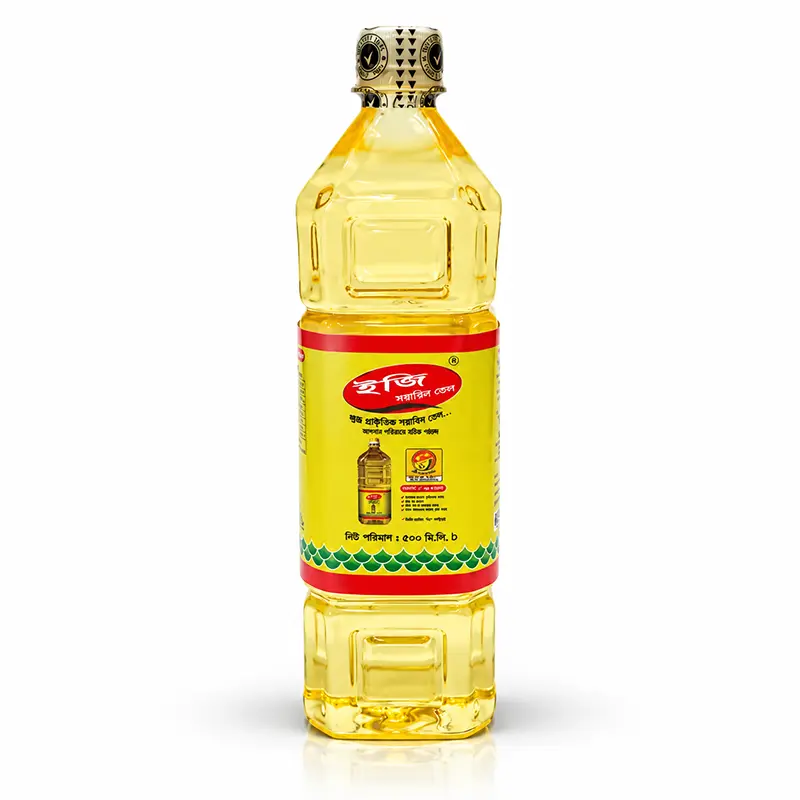
Easy Soyabean Oil is intended for familiar kitchen tasks: sautéing vegetables, preparing dal, cooking fish or meat curries, and using a measured amount of oil when a recipe needs it. Easy Food sells this soybean oil in four sizes: 500ml, 1 litre, 2 litres and 5 litres. Choose the quantity that matches how often your household cooks, rather than buying the largest pack automatically.
Cooking oil influences the texture of a dish, but good results also depend on the ingredients, the flame, and how much oil you use. A larger bottle does not mean a larger serving. Measuring at the start makes it easier to cook consistently and notice when a recipe needs less.
- For vegetables: start with a little oil, then adjust the cooking method.
- For dal: a measured amount works for tempering onions, garlic or spices.
- For curries: control heat so spices cook without scorching.
- For frying: avoid overheating and repeated long heating cycles.
Choose the cooking method first, then decide how much oil it needs
Bangladeshi home cooking includes very different techniques. A quick vegetable bhaji may need only a lightly coated pan; a fish curry has more liquid; a deep-fried snack needs an entirely different amount. Treat these as separate decisions. Buying a cooking oil is not the same as deciding to use a lot of it.
How to use soybean oil in vegetables, dal and curry
When cooking mixed vegetables, warm the pan gently and add a small, measured amount of oil. Soften onions or aromatic ingredients first if the recipe calls for them, then add the vegetables. Some vegetables release water as they cook, so adding oil repeatedly may not improve the result. Covering the pan briefly, stirring and adjusting the heat can help the ingredients soften without excessive oil.
For dal, the principal flavour may come from the finishing tempering or phoron. Keep the oil just hot enough for the selected spices to release their aroma; blackened garlic or burnt chilli can make the entire dish taste bitter. A measured spoon is more useful here than pouring directly from a heavy bottle. The tempering can then be mixed into the cooked dal.
For fish or meat curry, oil helps sauté onion and spice mixtures before water and the main ingredients are added. Gentle frying of the masala is different from allowing it to stick or burn. If the pan becomes dry, inspect the flame and the moisture level before automatically adding more oil. The correct approach varies with pan size, ingredients, and the recipe.
Stir-frying and shallow-frying are also different. Stir-frying generally uses smaller amounts with frequent movement of ingredients; shallow-frying relies on a thin layer of oil and sufficient contact with the hot pan. Deep-frying immerses food and can substantially increase oil use. None of these cooking styles makes the oil itself a health treatment.
Understanding fats without marketing shortcuts
Soybean oil is a plant oil containing both monounsaturated and polyunsaturated fats, as well as some saturated fat. Food guidance emphasises the overall quality of dietary fat. Replacing some foods high in saturated fat with unsaturated fats can be useful as part of a balanced diet; it does not mean all cooking oil can be eaten without limits.
Fat composition, calories and the important difference between oil and whole soybeans
A general USDA reference for standard soybean cooking oil reports approximately 884 kilocalories per 100 grams and 100 grams of total fat. Its reported fatty-acid composition is around 15.6 grams saturated, 22.8 grams monounsaturated and 57.7 grams polyunsaturated fat per 100 grams. Those are reference figures for a food category, not laboratory measurements of Easy's bottled product. Refining, composition and fortification details must be checked on the actual label.
One tablespoon of cooking oil can contain roughly 120 kilocalories, depending on its weight and the size of the spoon. A teaspoon is smaller, but kitchen teaspoons are not laboratory measures. If portion control matters, weigh oil occasionally or use a consistent measuring spoon instead of assuming that every pour is equal. Counting only the oil poured into the pan is imperfect when a substantial amount is left behind after cooking.
Whole soybeans contain protein, fibre and a broader collection of nutrients. Extracting oil does not transfer all those characteristics into the bottle. Soybean oil is not a substitute for beans, fish, vegetables, fruit or other nutritious foods. It supplies fat and energy and can help prepare a meal; the nutritional value of the entire meal comes from everything on the plate.
Ordinary soybean oil supplies essential fatty acids, including linoleic acid (an omega-6 fat) and a smaller amount of alpha-linolenic acid (a plant omega-3 fat). Neither fact proves that a particular brand's bottle has a tested omega content unless verified. It would also be misleading to describe omega-6 as automatically harmful or to promise that consuming more soybean oil prevents disease.
How much oil can an adult eat in a day?
There is no single tablespoon allowance appropriate for every adult. Total calorie needs, body size, activity level, age and the rest of the diet matter. The World Health Organization explains that limiting total dietary fat to about 30% of daily energy or less may help adults avoid unhealthy weight gain. That is a guideline about all dietary fat combined, not a target for cooking oil alone.
Consider a hypothetical 2,000-kilocalorie diet. Thirty percent of its energy is 600 kilocalories, equivalent to around 67 grams of total dietary fat using the standard nine kilocalories per gram calculation. This is only an illustration of the arithmetic, not an individually prescribed oil allowance. Fat from fish, eggs, dairy, nuts, snacks, meat and prepared foods counts towards the same total.
A useful household habit is to decide how much oil to start a recipe with, measure it and compare the finished food with your usual method. If the family enjoys the result, retain the approach; if food is sticking, adjust the heat, liquid, cookware or recipe before assuming that the solution is always more oil.
Children have different growth and energy requirements, so adult fat targets should not be mechanically assigned to them. Anyone receiving medical nutrition advice for a specific condition should follow that advice rather than an online universal spoon count.
Heat control matters more than a single smoke-point number
Soybean oil can be used in common cooking, but no oil benefits from burning, prolonged high heat or casual reuse. If oil is smoking strongly, has developed an unusual smell or is becoming dark and foamy, stop using it. Do not pour water onto hot oil.
Practical frying habits and why repeatedly used oil is a concern
Oil changes chemically during heating. High temperature, oxygen, food particles and heating time all affect that process. The Singapore Food Agency warns that repeated high-temperature frying can lower an oil's smoke point and lead to compounds that are undesirable to consume. The American Heart Association also advises against reheating or reusing cooking oil. For a household, the simple, conservative choice is to prepare what is needed and avoid storing a pan of repeatedly heated oil for further batches.
Keep the flame appropriate for the food. When a wok is heating empty or contains very little oil, the temperature can rise rapidly. Moist ingredients may splatter on contact with hot oil; dry the surface of ingredients when suitable, lower them carefully and keep children away from the cooking area. Use stable cookware and avoid overfilling it for frying.
Removing crumbs with a suitable utensil may improve the appearance of oil during a cooking session, but it does not reverse chemical degradation. Topping up old oil with fresh oil does not make the old oil new. If there is smoke, persistent foam, off-odour or an obvious colour change, discard the oil responsibly after cooling.
Smoke-point tables often show approximate values rather than a fixed temperature guaranteed for every bottle. Refining, heating history and the actual recipe make a difference. More importantly, a high listed smoke point is not a licence to fry food endlessly or ignore the quality of the total diet.
Soybean, mustard, sunflower, palm or olive: which suits your kitchen?
Flavour and cooking style matter when comparing oils; no single oil wins in every recipe.
Compare common cooking oils by flavour, fat profile and use
| Oil | Typical consideration | Practical cooking note |
|---|---|---|
| Soybean | Usually richer in polyunsaturated fat than palm oil | Versatile in everyday savoury recipes |
| Mustard | Distinctive flavour; profile varies by seed and product | Preferred where mustard aroma is part of the dish |
| Sunflower | Regular and high-oleic versions have different fat profiles | Check the specific type rather than the name alone |
| Palm | Generally more saturated fat than soybean oil | Often chosen for price, texture or food preparation needs |
| Rice bran | Another liquid vegetable oil with its own composition | Compare label information and suitability for the dish |
| Olive | Often rich in monounsaturated fat; flavour varies | Choice depends on grade, taste and cooking approach |
If you are making mustard-flavoured fish, a familiar mustard oil may deliver a taste soybean oil cannot imitate. If the dish should not carry a strong oil aroma, soybean oil may be a practical option. The meaningful nutritional question is also what the oil replaces in the wider diet, not just the bottle placed beside it.
It is fair to compare oils at the same serving size and discuss predominant fat types. It is not fair to compare the calories of one tablespoon of one oil against 100 grams of another, or to present a higher smoke-point figure as proof of superior nutrition. Price comparisons also need the same unit, such as cost per litre, and up-to-date shop data.
Where is soybean oil produced around the world?
Growing soybean seeds, crushing seeds to obtain oil and exporting finished oil are three different activities. According to USDA Foreign Agricultural Service production data for marketing year 2025/26, Brazil leads soybean seed production, while China leads soybean oil production. These are country-level figures, not evidence of where the oil inside any Easy bottle was grown or processed.
Why the top soybean-growing country is not necessarily the top oil producer
Soybeans can be grown in one country, traded as seeds, then processed into oil and meal somewhere else. The output of a country's crushing plants depends on processing capacity, imported beans and market demand, not just how many beans its farmers harvest. This is why soybean cultivation rankings cannot simply be copied into soybean oil production rankings. The USDA's 2025/26 production data identifies Brazil, the United States and Argentina as major soybean seed producers, and China, the United States, Brazil and Argentina as major producers of soybean oil.
Import, export and production are also different measurements. An exporter might ship significant quantities while another country produces more for local use. Numbers must be compared for the same crop, year and unit; the 2025/26 figures are marketing-year estimates or forecasts that can be revised. For an individual Easy pack, the manufacturer and country-of-origin information should come from its own label or other product-specific documentation.
Knowing this distinction helps answer a frequent consumer question without inventing a global origin claim for a local product. Production rank does not establish that one country's finished oil is automatically safer, purer or nutritionally superior.
Pack size, storage and a sensible buying check
Select a pack suited to your usage. Keep the cap closed and store the bottle away from direct sunlight and stove heat.
How to store oil and decide whether a bottle is still suitable
Heat, air and light affect stored cooking oil over time. Put the bottle in a shaded cupboard or shelf, not on a sunny windowsill or right beside a hot burner. Close the cap after each use. Keep the rim clean so the cap seals properly, and do not allow water or food debris to enter the bottle.
If you transfer some oil to a smaller kitchen dispenser, choose a clean, dry, food-appropriate container with a secure lid. Avoid topping up a dirty dispenser indefinitely. Label the transfer date if that helps your household rotate stock, and clean and dry the smaller container before refilling it.
Check the manufacturer's printed best-before or expiry information and any specific storage instructions on the actual pack. Do not use oil that has developed a distinctly rancid smell or abnormal appearance. A printed date is not permission to ignore obvious spoilage or poor storage conditions.
Households that use very little oil should think twice before purchasing the largest pack solely for its size. Conversely, frequent cooking across a large family may justify a larger pack provided it can be stored appropriately and used within the stated period. This is a practical purchasing judgement rather than a claim about one pack being chemically better than another.
What Bangladesh's vitamin-A rule and BSTI standard mean for shoppers
Bangladesh's Vitamin A Fortification in Edible Oil Act, 2013 sets rules for fortifying edible oil with vitamin A and related labelling and marketing requirements. BSTI also publishes a standard titled Fortified Soyabean Oil, BDS 1769:2014, Amendment 1 (2021). These sources explain the regulatory framework that a shopper can understand; they do not independently identify the vitamin A concentration, licence details or test results of a particular Easy bottle.
When examining packaged cooking oil, look for legible declarations, the net quantity, batch/lot information, manufacturing and expiry or best-before dates, and the manufacturer's identification wherever supplied on the pack. Read any approval symbol and product information on the actual label rather than relying on marketing imagery.
For this Easy brand listing, BSTI approval is a business-confirmed statement. It should appear once as a factual identification, without extending it to unrelated claims such as 'organic', 'allergy-free', 'zero risk' or 'doctor recommended'. Regulatory compliance and the nutritional suitability of an individual's diet are separate questions.
The presence of vitamin A in a fortified edible oil also should not lead consumers to treat the oil as a vitamin supplement. Fortification policies address population nutrition; they do not change the fact that cooking oil is calorie-dense and normally consumed as part of meals in measured quantities.
Common questions before adding oil to your basket
Does soybean oil contain cholesterol?
Cholesterol is naturally associated with animal-derived foods, not ordinary plant oil. That broad fact does not tell you the precise composition of this product's label or allow an unverified package-specific 'zero trans fat' claim. The more useful dietary comparison is the balance of saturated, unsaturated and trans fats in the foods you usually eat.
Can someone with a soy allergy use it?
Highly refined soybean oil normally contains very little soy protein, and many people with soy allergy tolerate it. Cold-pressed or less-refined soy oils can be different. Anyone with a diagnosed soy allergy should check the actual label and seek advice from their treating clinician if the refining information is unclear. Do not treat all soybean oils as identical for allergy purposes.
Is soybean oil suitable for people managing diabetes, cholesterol or weight?
These concerns are not resolved by a brand of cooking oil alone. Someone managing diabetes will usually need to consider the full meal and overall energy intake, while cholesterol management includes replacing saturated fat where practical and looking at dietary patterns. People managing weight need to remember that all cooking oils are energy-dense. Individual advice belongs with an appropriately qualified healthcare professional.
Can I use the same oil for vegetables, fish and meat?
It can be used in different savoury recipes, but the technique and flavour goals change. A quick vegetable stir-fry may use a measured spoonful; a fish curry involves spice sautéing and added liquid; shallow-frying meat is a separate cooking method. Adjust the quantity and heat to the recipe rather than relying on a universal pour.
Does bigger packaging make the oil itself better?
No. Pack size changes convenience and storage planning, not the basic category of oil. Easy Food sells 500ml, 1-litre, 2-litre and 5-litre packs. Choose according to household usage and available storage, and check the selected pack's quantity and availability before ordering.
Sources for general guidance
Nutrition and safety guidance: WHO healthy diet (2026); American Heart Association cooking oils; Singapore Food Agency reused oil guidance; FARE soy allergy guidance; Bangladesh Vitamin A Fortification Act, 2013; BSTI BDS 1769; USDA FoodData Central; USDA global production data (2025/26).
.webp1793592768hp8zYlXq.webp)