







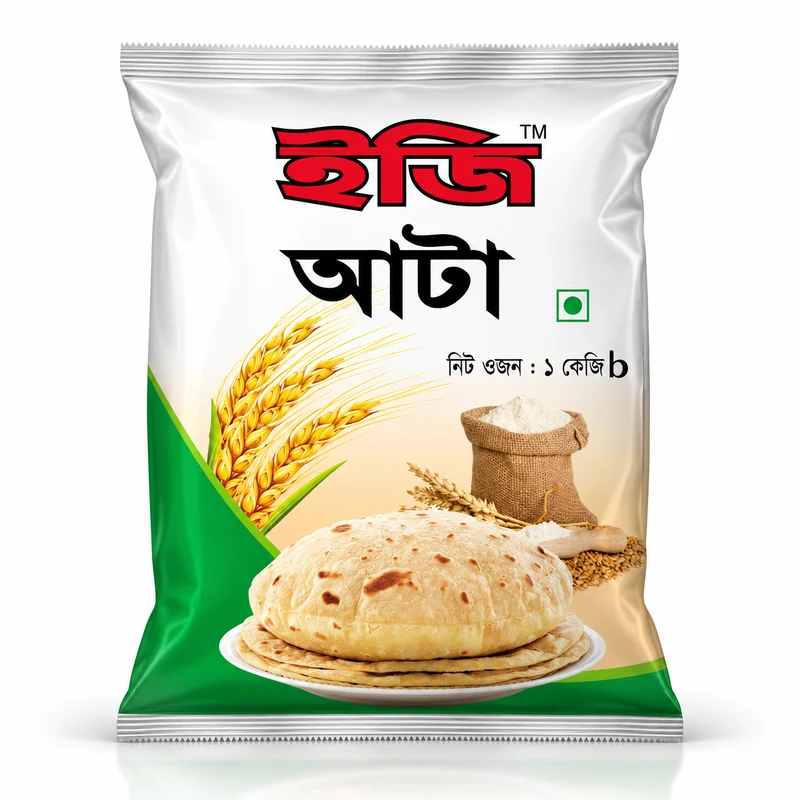
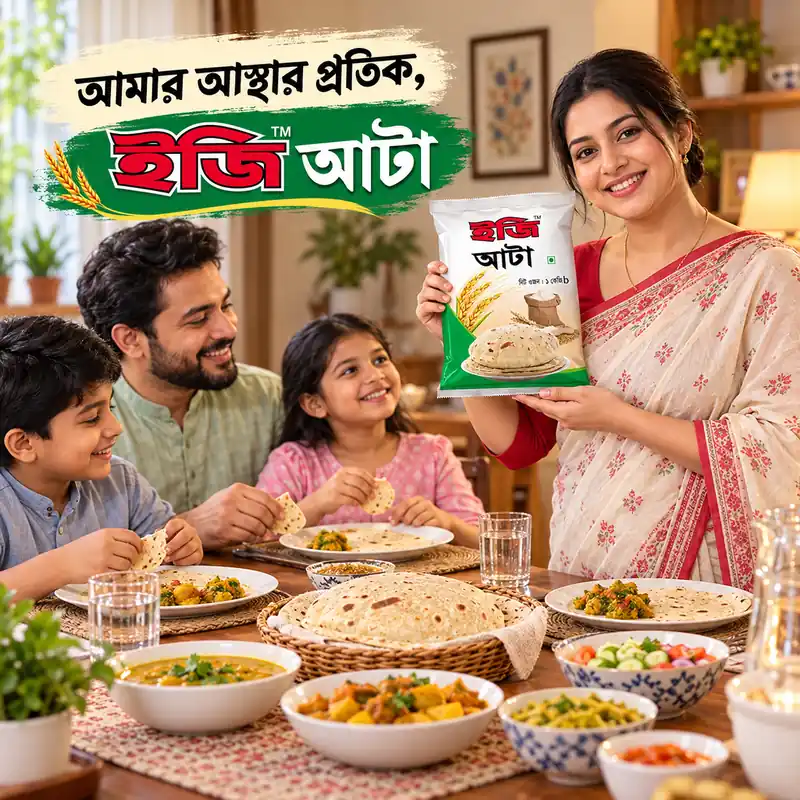
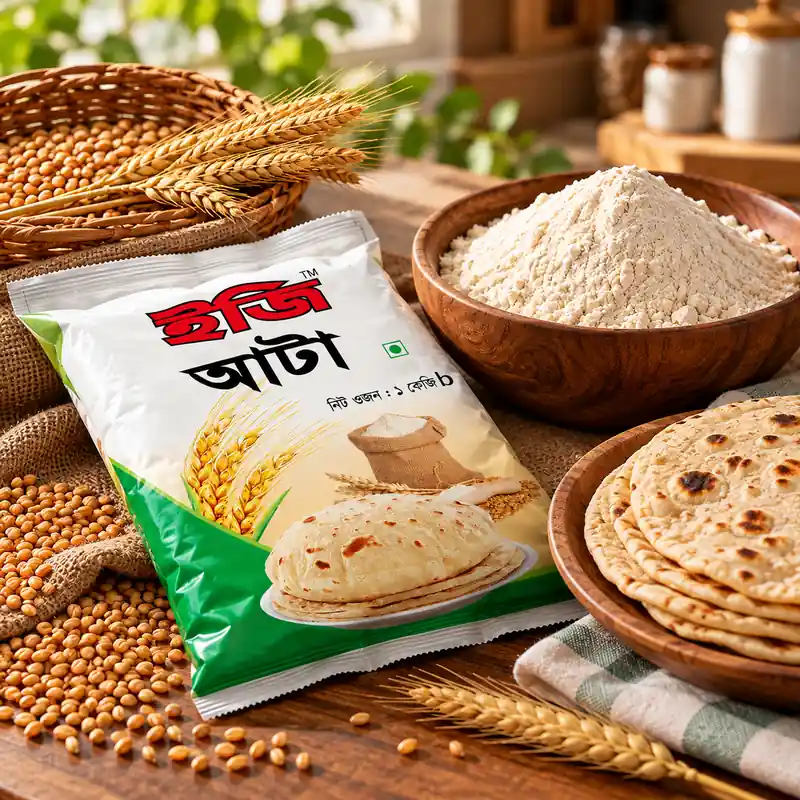
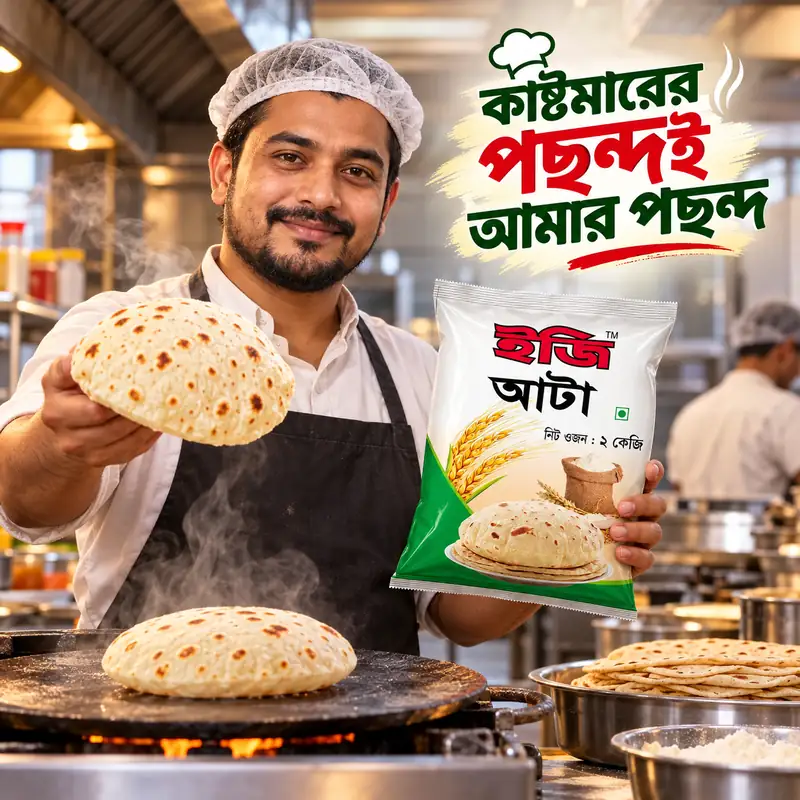
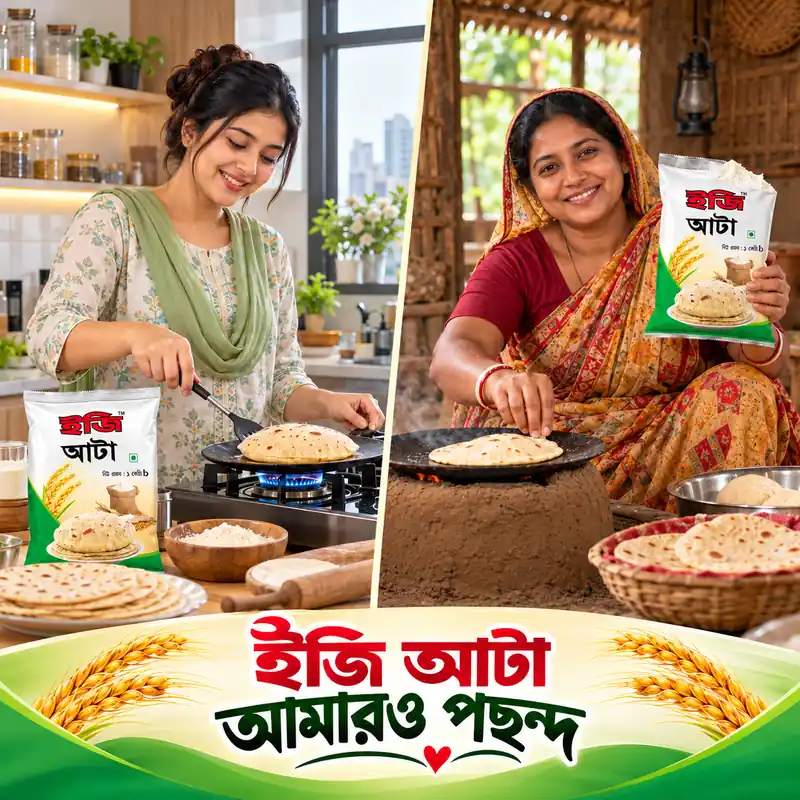
Roti on the breakfast table, chapati with a simple vegetable curry, or homemade paratha for a weekend meal—wheat atta is a familiar ingredient in Bangladeshi kitchens. Easy Atta is offered in 1 kg, 2 kg and 3 kg packs, allowing households to choose a quantity that fits their everyday cooking needs.
Whether you prepare flatbreads occasionally or make them every day, knowing how to handle the flour, mix the dough, control the cooking temperature and store the remaining atta can make kitchen work more convenient.
Everyday Ways to Use Easy Atta
Atta is particularly useful in kitchens where freshly prepared flatbreads form part of regular meals. A basic dough generally requires flour and water, while salt, oil and other ingredients can be adjusted according to the recipe.
- Roti: A simple flatbread commonly served with vegetables, lentils, eggs, fish or meat dishes.
- Chapati: A thin flatbread prepared on a heated tawa or flat pan.
- Paratha: A richer preparation that may include oil or ghee and additional folding or layering.
- Stuffed flatbreads: Dough may be combined with potato, vegetables or other suitable fillings.
- Homemade snacks: Wheat flour can be incorporated into suitable savoury dough recipes.
Results depend on the recipe, flour characteristics, water absorption, kneading and cooking technique. Different flour batches and different styles of bread may require adjustments.
Making Soft Roti at Home
Preparing roti is straightforward, but small details affect the finished texture. A dough that is too dry can become difficult to roll, while excessive water may produce a sticky mixture. Gradually adding water is usually easier than trying to correct a very wet dough later.
- Place the required amount of atta in a clean mixing bowl.
- Add clean water gradually, mixing until the flour begins forming a dough.
- Knead until the dough becomes reasonably smooth and pliable.
- Cover and rest the dough briefly before dividing it into portions.
- Roll each portion into a thin, even round using a small amount of dry flour when necessary.
- Cook on a properly heated tawa, turning as needed until the bread is fully cooked.
- Keep finished rotis covered with a clean kitchen cloth before serving.
Practical tip: If the dough feels stiff, add a little water and knead again. If it is excessively sticky, adjust carefully with a small quantity of flour. The ideal consistency varies with the recipe.
More cooking tips: dough consistency, resting and roti texture
Why Dough Consistency Matters
Wheat flour absorbs water as it is mixed and rested. Water absorption varies according to particle size, flour composition, storage conditions and the intended preparation. That is why a single fixed water quantity cannot be assumed to work equally well for every flour.
When preparing dough, begin with a moderate amount of water. Mix with clean fingers or a suitable utensil, gradually incorporating the remaining flour. The mixture should come together without leaving large areas of dry powder or excessive liquid at the bottom of the bowl.
Does Dough Need to Rest?
A short resting period gives the flour more time to absorb moisture. It can also make the dough easier to handle and roll. Cover the dough during resting so that its surface does not dry out.
Resting time is not a universal quality test. Some recipes need only a brief rest, while others call for longer periods. A practical starting point for ordinary chapati is around 15 to 30 minutes, followed by adjustments based on the dough's condition and the recipe being followed.
Rolling Without Tearing
Divide the dough into manageable portions and shape each one into a ball. Use a clean, lightly floured surface. Roll gently from the middle towards the edges, turning the dough occasionally to prevent sticking.
Consistent thickness helps the bread cook more evenly. Very thick sections may remain undercooked while thinner edges become dry. Using too much loose flour during rolling can also leave dry patches on the finished roti.
Managing the Tawa Temperature
Preheat the tawa before placing the rolled dough on it. If the surface is insufficiently heated, the bread may spend too long cooking and become dry. Excessively high heat, however, can burn the outside before the inside cooks properly.
Adjust the flame according to the pan, stove and thickness of the bread. Cook both sides properly. A roti that inflates is visually appealing, but puffing alone does not establish the quality of the atta or guarantee complete cooking.
Keeping Roti Pleasant to Eat
Place cooked rotis in a clean covered container or wrap them temporarily in a clean cloth. This can help reduce moisture loss before the meal. Avoid allowing steam to accumulate for an extended period inside an unsuitable closed container, particularly when storing bread for later.
For longer storage, cool the cooked bread appropriately and follow safe refrigerated or frozen food-storage practices. Reheat thoroughly before serving.
For an additional flatbread preparation reference, see King Arthur Baking's chapati preparation guide .
Choosing Between 1 kg, 2 kg and 3 kg Packs
Easy Atta is available in three pack sizes. The right choice depends mainly on how frequently flour-based foods are cooked, the number of people in the household and the amount of suitable storage space available.
A 1 kg pack may be convenient for smaller households or occasional use. A 2 kg pack gives regular users another purchasing option, while the 3 kg pack may be practical for households preparing roti or paratha frequently.
Buying a larger pack is not automatically more economical if the flour remains unused for too long. Consider your normal consumption and storage conditions before selecting the quantity.
How to estimate the amount of atta your family needs
Start With Your Actual Cooking Routine
One household might serve roti only at breakfast. Another may prepare it at breakfast and dinner. Some families use atta for several days each week but prefer rice on other days.
These habits can lead to very different flour consumption even when the number of family members is identical. Instead of estimating solely from household size, consider how much flour normally goes into a typical meal.
A Simple Kitchen Calculation
Suppose your household uses approximately 200 grams of dry flour whenever roti is prepared. A 1 kg pack contains enough flour for approximately five such preparation sessions, before accounting for small handling losses or flour used for dusting.
Under the same example, a 2 kg pack would cover about ten sessions and a 3 kg pack about fifteen. These are arithmetic examples, not guaranteed numbers of rotis or recommended serving quantities.
The actual number of flatbreads depends on their diameter, thickness and how much flour is allocated to each dough portion.
Consider Storage Before Bulk Buying
A larger package requires a suitable dry container and a place away from steam, water and pests. Households with limited cupboard space or an especially humid kitchen may find smaller, more frequently purchased packs easier to manage.
Wheat Atta, Whole Wheat Flour and Maida: What Changes?
The words atta, whole wheat flour and maida are sometimes used interchangeably in casual shopping conversations, but they do not always describe identical flour composition. Processing and the proportion of grain components retained can influence colour, texture, nutritional composition and cooking behaviour.
A whole wheat flour retains the bran, germ and endosperm in their original proportions. Refined wheat flour generally removes much of the bran and germ. However, the term "atta" by itself should not be treated as proof of a particular whole-grain percentage.
Detailed comparison: atta, maida, brown flour and milling methods
The Three Main Parts of a Wheat Grain
- Bran
- The outer covering of the grain, containing dietary fibre and naturally occurring micronutrients.
- Germ
- The developing part of the grain, containing natural oils and a range of nutrients.
- Endosperm
- The largest portion of the grain, providing mainly starch and some protein.
When all three parts remain in their original proportions, the flour can qualify as whole grain. Grinding the grain into a fine powder does not, by itself, remove its whole-grain identity.
Whole Wheat Flour Versus Refined Maida
Whole wheat flour generally supplies more dietary fibre than refined flour made primarily from the endosperm. Refined maida often has a lighter colour and different functional properties, which may make it preferable for certain recipes requiring a smoother texture.
Whole wheat flour may produce a more characteristic wheat flavour and different dough-handling behaviour. Neither ingredient should be judged solely by colour. The best choice also depends on the recipe and the individual's overall dietary needs.
Is Brown Atta Always Whole Wheat?
Not necessarily. Flour can appear darker because of bran content, wheat variety, particle size or other processing characteristics. Its appearance is not sufficient to establish the exact proportion of whole grain it contains.
If whole wheat content matters to your purchasing decision, examine the ingredient declaration rather than relying entirely on the shade of the flour or promotional wording on a package.
Stone-Milled Versus Roller-Milled Flour
Stone milling and roller milling describe different processing technologies. Stone milling can grind grain between suitable grinding surfaces. Roller mills use rollers and controlled processing stages to achieve particular flour characteristics.
Neither method automatically guarantees superior nutrition. Relevant factors include the wheat used, how much bran and germ remain in the finished flour, processing conditions and subsequent storage.
Similarly, the word "machine-milled" should not be interpreted as a sign of inferior quality. Modern processing equipment can provide controlled particle size and production consistency when appropriately operated and maintained.
Because manufacturing details for this particular Easy Atta product have not been established here, no specific milling technology or nutritional advantage is attributed to the brand.
Further reading: Whole Grains Council — Whole and refined grains .
Nutrition: Looking Beyond the Flour Packet
Wheat-based foods contribute carbohydrates to the diet, which the body uses as an important energy source. Wheat also contains plant protein, although exact nutrient quantities depend on the flour's composition.
A balanced meal matters more than one ingredient alone. Roti served with vegetables, pulses, eggs or another suitable protein source provides a different overall meal composition from roti eaten with only sugary or high-fat accompaniments.
According to the World Health Organization, varied diets built around appropriate quantities of whole grains, vegetables, fruit and pulses can support healthy dietary patterns. That general guidance is not a clinical claim about a particular atta brand.
Understanding fibre, carbohydrates, protein and energy
Carbohydrates and Everyday Energy
Wheat flour consists largely of carbohydrates, particularly starch. During digestion, much of this starch is broken down into glucose that the body can use for energy.
The amount of carbohydrate in a serving of roti depends primarily on the dry flour used, as well as any additional ingredients. Water changes the weight of the dough and cooked bread but does not create extra carbohydrate.
Why Dietary Fibre Matters
Dietary fibre is associated with important digestive and wider health functions. Whole grain wheat products generally contain more naturally occurring fibre than highly refined wheat flour.
However, it would be misleading to assign a specific fibre amount to Easy Atta without a verified nutrient declaration or product analysis. A general nutrition database cannot establish the tested composition of an individual package.
Protein and Micronutrients
Wheat provides some plant protein and may contribute vitamins and minerals. The proportions of these nutrients vary with the wheat variety, degree of refinement, any approved fortification and other manufacturing factors.
Wheat protein is also relevant to dough structure. Gluten-forming proteins help create a network when flour and water are mixed and kneaded. This network contributes to the handling characteristics of many wheat-based doughs.
Does Atta Automatically Help With Weight Loss?
No single atta product can guarantee weight loss. Body-weight management involves overall energy intake, dietary quality, physical activity, medical circumstances and other individual factors.
A meal prepared with wheat atta can fit within a weight-management plan, but portion size and added ingredients still matter. For example, adding substantial oil or ghee to paratha increases the energy content of that preparation.
What About Blood Sugar?
Wheat flour is a carbohydrate-containing food. People living with diabetes generally need to consider the quantity of carbohydrate consumed and the composition of the entire meal.
Choosing an appropriate portion and pairing it with non-starchy vegetables and suitable protein may be useful within an individual eating plan. There is no universal number of rotis suitable for every person with diabetes.
Relevant guidance: WHO — Healthy diet and American Diabetes Association — Diabetes and carbohydrate foods .
Food Allergies and Safe Preparation
Flour is also generally a raw agricultural food ingredient. Do not taste uncooked flour, raw dough or batter. Prepare flour-based foods thoroughly and clean utensils, work surfaces and hands after handling uncooked flour.
More about wheat allergy, celiac disease and safe flour handling
Wheat Allergy and Celiac Disease Are Different
A wheat allergy involves an allergic response to wheat proteins. Celiac disease is an immune-mediated condition triggered by gluten, which is naturally present in wheat, barley and rye.
These conditions have different diagnostic approaches and medical implications. If symptoms occur after eating wheat-based foods, professional medical evaluation is more appropriate than attempting to diagnose the cause from a food label.
Should Everyone Avoid Gluten?
Not necessarily. Gluten avoidance is essential for certain diagnosed medical conditions, but it is not an automatic requirement for every healthy individual.
People considering a gluten-free diet because of possible celiac disease should speak to a qualified clinician before removing gluten, as changing the diet prematurely may affect diagnostic testing.
Why Raw Flour Should Not Be Eaten
Wheat grows outdoors and may come into contact with microorganisms before processing. Ordinary flour milling is not necessarily a treatment designed to eliminate harmful bacteria.
For this reason, flour should be used in properly cooked preparations. Children should not be encouraged to eat raw dough or play with uncooked flour mixtures intended as food.
Practical Kitchen Hygiene
- Wash hands before preparing food and after handling raw flour.
- Use clean bowls, rolling pins and preparation surfaces.
- Keep uncooked flour away from ready-to-eat meals.
- Cook flour-based foods thoroughly.
- Store leftover ingredients in suitable covered containers.
Sources: NIDDK — Celiac disease and gluten and FDA — Handling flour safely .
How to Store Atta in Bangladesh's Humid Weather
Flour can absorb moisture and surrounding odours. After opening a pack, transfer the remaining atta to a clean, dry, food-safe container with a properly fitting lid, unless the packaging itself provides an effective resealing method.
Keep the container away from the sink, stove, direct sunlight and humid surfaces. Check the package instructions and use the product within the applicable labelled shelf-life.
If flour develops visible mould, signs of infestation, an unusual smell or other clear signs of spoilage, do not use it.
Additional storage guidance for warmer months
Why Moisture Is a Concern
Flour is a dry ingredient, but it can absorb moisture from the surrounding air. High humidity may encourage clumping and contribute to deterioration under unsuitable storage conditions.
Keep scoops and measuring utensils completely dry. A wet spoon placed inside a flour container introduces unnecessary moisture.
Should Atta Be Refrigerated?
Refrigeration may be helpful for some flours, especially whole wheat varieties that contain naturally occurring oils and may deteriorate faster under warm conditions.
However, cold storage requires proper packaging. A poorly sealed container may allow moisture and food odours to affect the flour.
If refrigerated or frozen flour is used, avoid opening a cold container repeatedly in humid air, as condensation can become a concern. Keep the container sealed while its temperature equalises when appropriate.
Never Mix Old and New Flour Without Checking
Before refilling a container, inspect and clean it as needed. Completely dry it before adding fresh flour. Avoid placing a new package directly on top of old, deteriorating flour.
Good stock rotation makes it easier to track purchase dates and use older suitable flour first. Keep the original package or record its essential date information for reference.
Further information: Penn State Extension — Storing staple ingredients .
Easy Atta: Product Quality and Buying Considerations
Easy Atta is identified by the brand as a BSTI-approved product. When purchasing packaged flour, buyers should also examine the pack condition, labelled quantity, relevant dates and storage information.
Before ordering, choose the required weight variant. When the product is delivered, confirm that the received package matches the selected quantity. A sealed, undamaged pack is preferable to one showing punctures, leakage or possible contamination.
What to check before and after buying flour online
Identify the Correct Pack
Product pages may display several pack sizes. Select the intended quantity instead of relying only on the first photograph in the gallery. The exact variant matters because different packs can have different prices, packaging and stock.
Inspect the Packaging
Check the outer seal and look for damage. A punctured flour packet may allow contents to escape or become exposed to moisture, insects and other environmental contaminants.
Check Dates and Label Information
Follow the manufacturer's labelled storage and date instructions. If a date is unclear or essential information is missing from the physical package, contact the seller before use.
Understand What Packaging Cannot Prove
Attractive printing, a wheat illustration or a particular flour colour cannot independently establish nutrient content, purity or a specific milling technology.
Product quality should be evaluated through reliable labelling, appropriate manufacturing controls and applicable verification—not promotional claims alone.
Frequently Asked Questions
Can Easy Atta be used to make roti and chapati?
Yes. It is offered as wheat atta for familiar flatbread preparations. The final texture will depend on the dough and cooking method.
Which pack size should I select?
Choose 1 kg, 2 kg or 3 kg according to household consumption and available storage space. Frequent use may make a larger pack practical.
Is atta the same as maida?
Not always. Atta and maida can differ in their degree of refinement and grain composition. Check the specific product's ingredient information.
Can people with diabetes eat roti?
Roti can be included in some diabetes meal plans, but carbohydrate portions and individual medical advice matter. No atta should be treated as automatically blood-sugar-free.
Is wheat atta gluten-free?
No. Wheat contains gluten and is unsuitable for people who must strictly avoid gluten.
How should I store an opened atta pack?
Keep the flour in a dry, covered, food-safe container away from heat and moisture. Follow the storage instructions on the package.
Choose the Pack That Fits Your Kitchen
From a few freshly cooked rotis to regular family meals, the right atta quantity should fit your cooking routine and storage needs. Select the 1 kg, 2 kg or 3 kg Easy Atta variant that suits your household and review the chosen pack before adding it to your cart.
.webp1793592768hp8zYlXq.webp)