







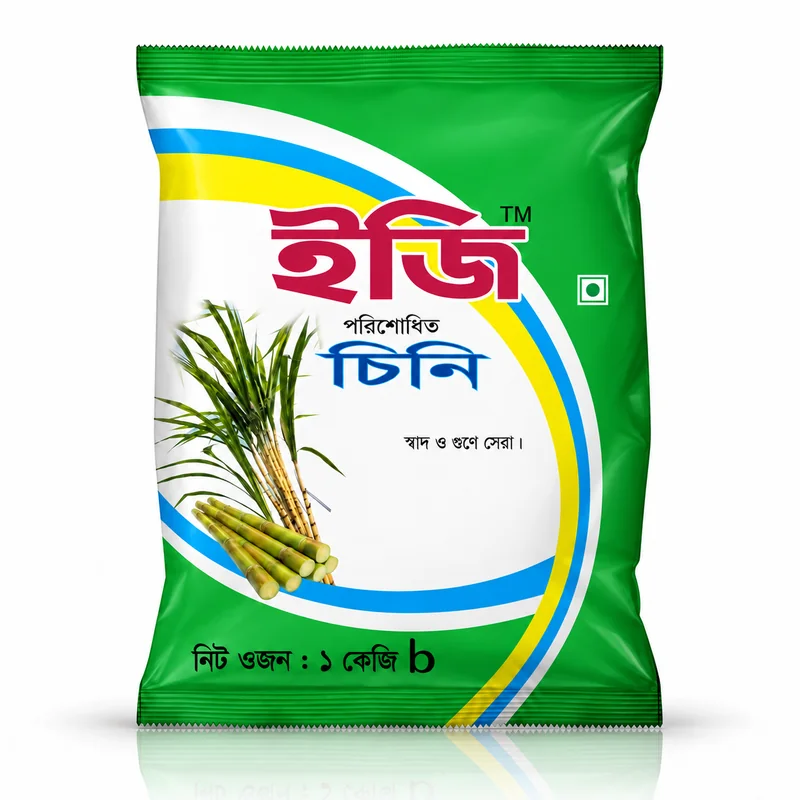
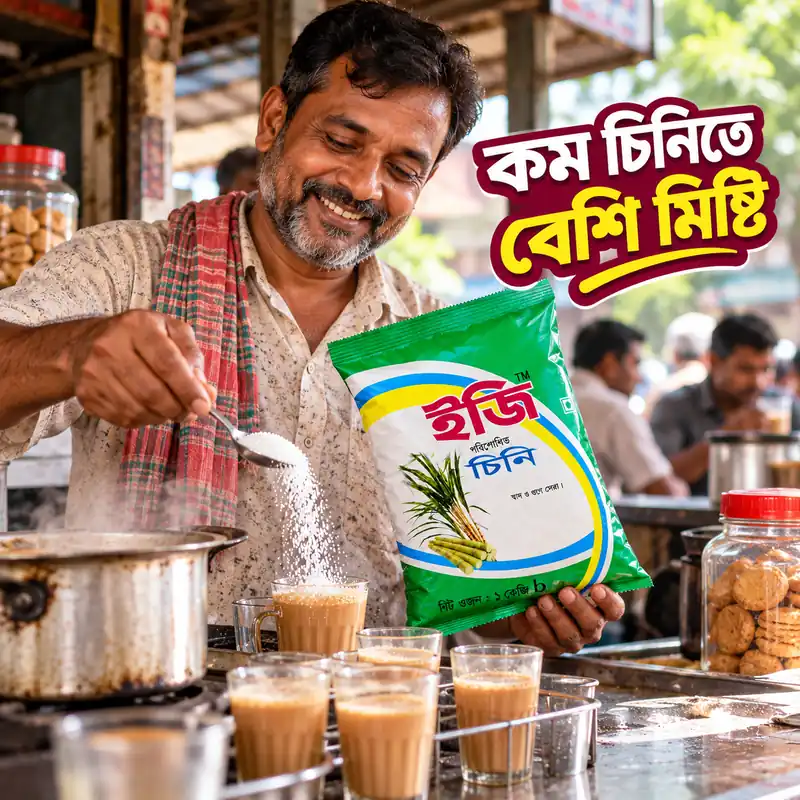
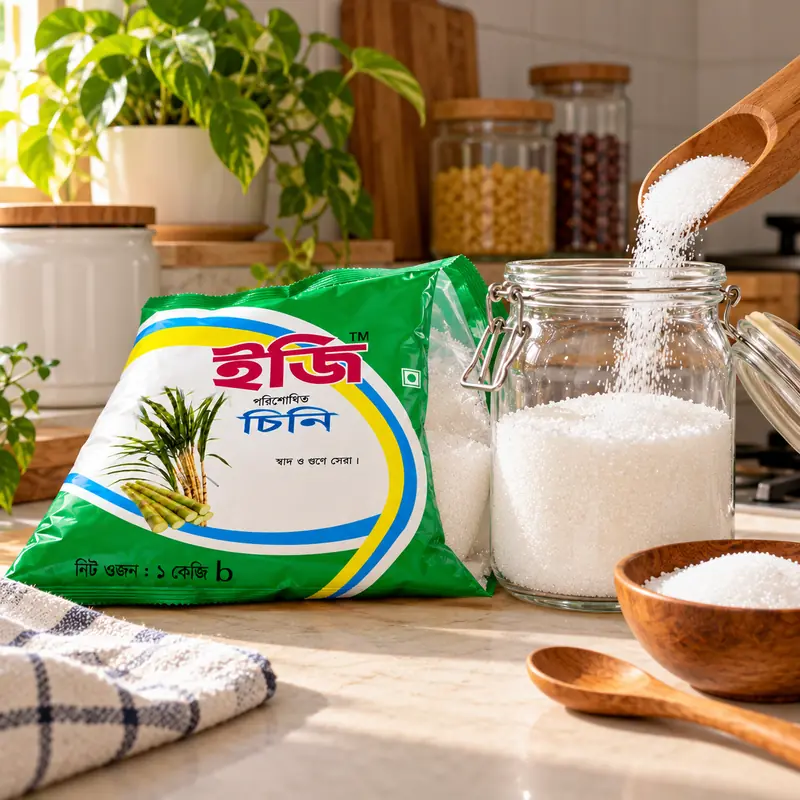
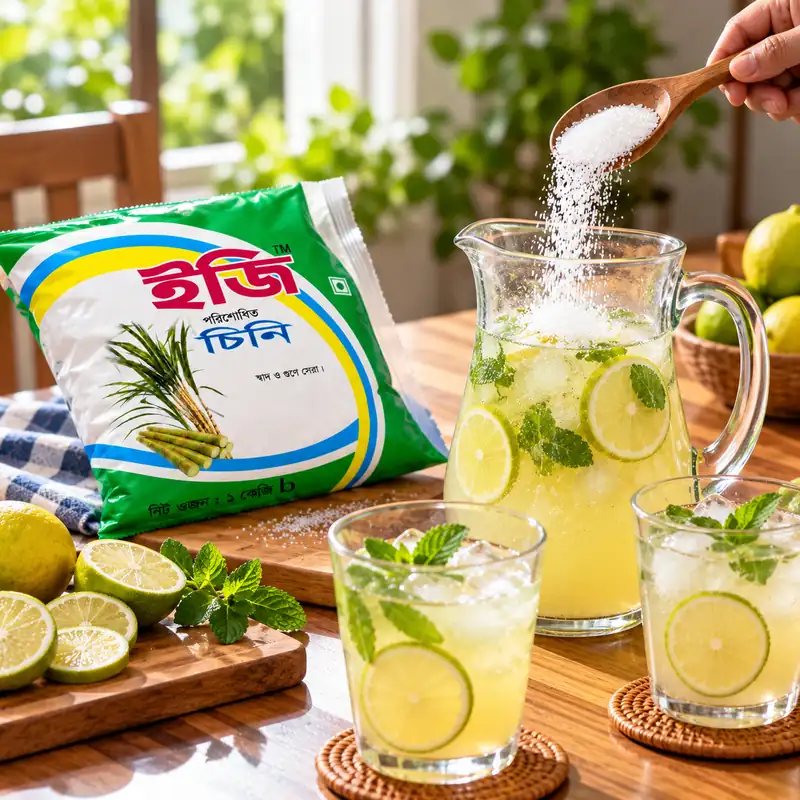
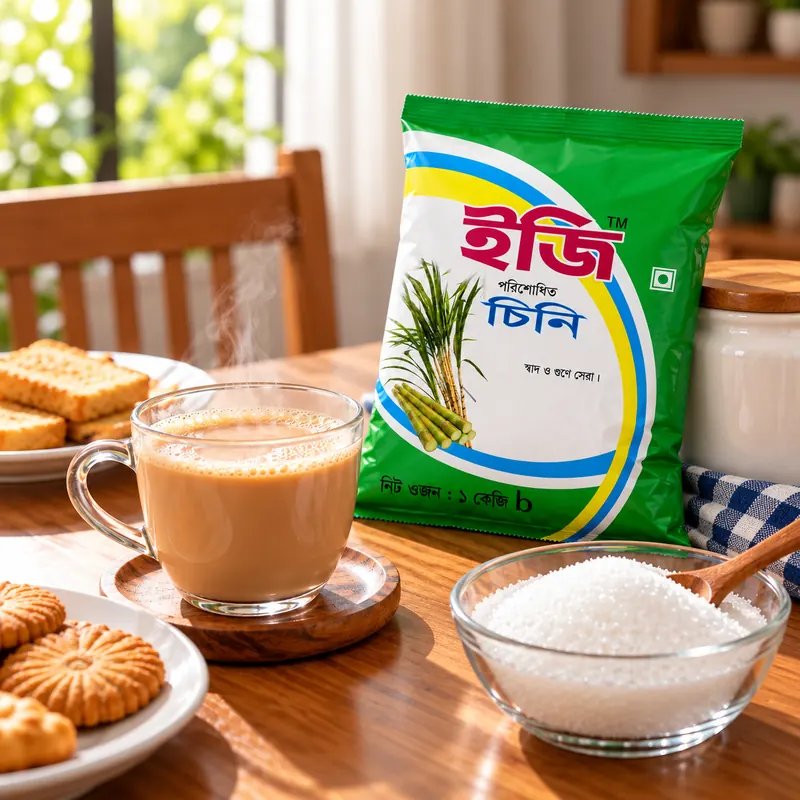
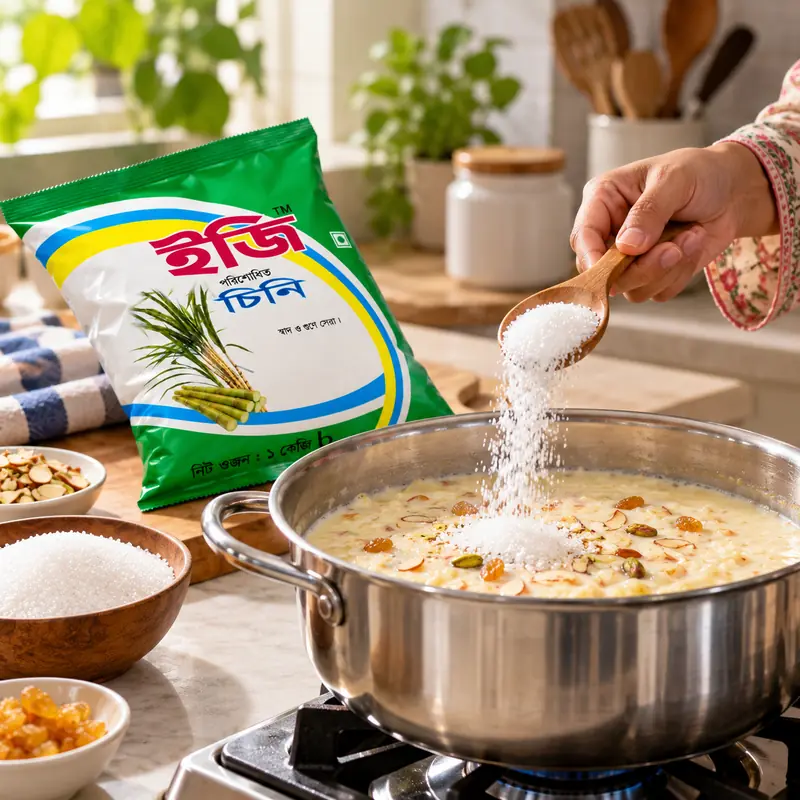
A cup of milk tea, a homemade dessert or a jug of refreshing lemon sharbat often begins with one familiar kitchen ingredient: sugar. Easy Refined Sugar 1kg is packaged granulated white sugar for everyday household cooking, drinks and sweet recipes in Bangladesh. Its convenient pack size makes it suitable for keeping a measured supply in the kitchen.
What makes refined sugar useful in the kitchen?
Refined granulated sugar provides sweetness without the pronounced flavour of ingredients such as jaggery or honey. That makes it a practical choice when the taste of tea, milk, fruit or other recipe ingredients should remain the focus.
Sugar also does more than sweeten. Depending on the recipe, it can contribute to texture, browning, moisture retention and the way a dessert sets. These effects are particularly relevant when preparing cakes, biscuits, caramel and certain traditional sweets.
How sugar behaves in different recipes
Granulated sugar dissolves into the liquid portion of foods and beverages. Warm liquids generally help the crystals dissolve faster, while cold drinks may require additional stirring. The result also depends on the amount of sugar, the liquid temperature and how thoroughly the mixture is stirred.
In baking, sugar influences the finished product in several ways. During mixing, sugar can help incorporate air when creamed with fat. It also competes for available moisture and affects the development of structure. As baking continues, reactions involving sugars contribute to the colour, aroma and flavour of many baked foods.
Different recipes require different amounts and techniques. A soft cake, crisp biscuit and caramel sauce cannot be expected to behave identically simply because all three contain sugar.
In milk-based desserts, dissolved sugar adds sweetness while the consistency primarily depends on the milk, rice, vermicelli or other ingredients. Add sugar gradually and taste before adding more. This gives greater control over the finished dessert.
Sugar may also play a functional role in jams and preserved foods. In preservation recipes, sugar concentration can affect texture and keeping quality. Do not significantly alter the sugar quantity in a tested shelf-stable preservation recipe without following a validated alternative method.
Everyday ways to use Easy Refined Sugar
From a morning drink to a family occasion, granulated sugar is versatile because the quantity can be adjusted according to the recipe and individual taste.
- Tea and coffee: Add a measured amount to milk tea, black tea or coffee.
- Homemade sharbat: Sweeten lemon drinks and other freshly prepared beverages.
- Payesh and semai: Balance the sweetness of traditional milk-based desserts.
- Cakes and biscuits: Use in recipes designed for granulated sugar.
- Fruit desserts: Add sweetness to suitable cooked fruit preparations.
Practical quantities for tea, sharbat and homemade desserts
Milk tea: begin with a measured amount
Prepare tea in your usual way and start with a smaller quantity of sugar rather than automatically adding several teaspoons. One level teaspoon of granulated sugar is approximately 4 grams, although the actual weight depends on the spoon and how it is filled.
For example, starting with half a teaspoon, stirring thoroughly and tasting can help identify the sweetness you prefer. This is a recipe-adjustment technique, not a recommended daily sugar dose.
Lemon sharbat: dissolve before serving
Mix drinking water and freshly squeezed lemon juice, then add sugar a little at a time. Stir until the visible crystals have dissolved. Add ice and, if preferred, a few mint leaves immediately before serving.
If preparing a large jug, begin with a modest measured amount and adjust after tasting. A stronger lemon flavour may change how sweet the drink appears, so it is useful to taste the complete mixture rather than the sugar water alone.
Payesh: sweetness is only one element
A typical homemade payesh combines rice and milk cooked until the rice softens and the mixture thickens. Sugar is added according to the recipe and preferred sweetness, often during a later stage of cooking.
Stir regularly to prevent milk from catching at the bottom of the pot. Cardamom, nuts and raisins can contribute flavour and texture, but their addition does not require the dessert to be excessively sweet.
Semai: control sweetness and consistency
In milk-based semai, the liquid continues to thicken as the vermicelli absorbs moisture. Taste near the end of cooking and make gradual adjustments. Remember that sweetened condensed milk, if used, already adds sugar to the dish.
Home baking: measure more carefully
When baking a cake or biscuits, use the quantity stated in a reliable recipe. Reducing sugar may change browning, spread, moisture and texture. Kitchen scales are more consistent than loosely filled cups or spoons.
These examples are for ordinary home cooking. They are not intended as nutritional prescriptions or guarantees of identical results with every recipe.
Understanding sugar, calories and balance
Ordinary refined table sugar consists predominantly of sucrose, a carbohydrate that supplies approximately 4 kilocalories per gram. It provides energy but is not a meaningful source of dietary fibre, protein or essential vitamins.
The most useful way to assess sugar intake is to consider the whole day's diet. Sugar added to tea, desserts, sweet drinks and packaged foods can accumulate even when the quantity in each serving seems small.
What counts as free sugar, and how can daily consumption add up?
Free sugars include sugars added by manufacturers, cooks and consumers, along with sugars naturally present in honey, syrups, fruit juice and fruit juice concentrates. Sugars contained within the cellular structure of intact whole fruit are not treated in the same way under this definition.
Consider two cups of tea, each prepared with two level teaspoons of sugar. Using approximately 4 grams per teaspoon, the tea alone supplies about 16 grams of added sugar across the day.
If the same person also drinks a sweetened beverage or eats a dessert, the total rises. The example is not evidence that any particular tea recipe is healthy or unhealthy; it simply illustrates why measuring sugar is useful.
A 2,000-calorie diet is only an example. Energy requirements vary with age, body size, activity and health status. The 25g figure should not be interpreted as a universal prescription for every child or adult.
Sugar contributes energy, but it should not replace foods that supply fibre, protein, vitamins and minerals.
A practical approach is to avoid automatically increasing sweetness. Taste a drink before adding more, choose plain water more often and pay attention to added sugars in prepared snacks and bottled drinks.
WHO also identifies free-sugar intake as an important risk factor for dental caries. Frequent exposure to sugary drinks and snacks is therefore a consideration beyond calorie intake. Read WHO's dental health guidance .
Choosing a sugar for your household
Refined white sugar, brown sugar, jaggery and honey can all provide sweetness, but they differ in flavour, moisture, composition and recipe behaviour. No single sweetener is automatically the best option for every food.
White sugar vs brown sugar, jaggery and honey
| Sweetener | Typical characteristics | Kitchen considerations |
|---|---|---|
| Refined white sugar | Granulated, relatively neutral sweetness, predominantly sucrose | Suitable for tea, sharbat, desserts and recipes specifying white granulated sugar |
| Brown sugar | Brown colour and molasses-related flavour; moisture varies | Can change flavour, moisture and texture in baking |
| Jaggery | Traditional sweetener with characteristic flavour, colour and variable composition | Useful in recipes where the distinctive taste is desired |
| Honey | Liquid sweetener containing different naturally occurring sugars and water | Changes moisture and flavour; not a direct weight-for-weight substitute in every recipe |
Is brown sugar automatically healthier?
The colour of a sugar does not by itself establish a meaningful health advantage. Brown sugar may contain molasses-related compounds, but it still contributes free sugars and calories. A dark colour should not be confused with permission to consume unlimited quantities.
Is honey a better substitute?
Honey offers its own flavour and composition, but it also contributes free sugars. Swapping a teaspoon of table sugar for honey does not eliminate the need to consider total intake. Honey must never be given to infants under 12 months because of the risk of infant botulism.
When should a recipe not be changed?
In ordinary tea, sweetness is easy to adjust. In baking, jam making or shelf-stable preservation, replacing ingredients can alter texture, performance or safety. Follow a tested recipe for products intended for long-term storage.
The appropriate choice depends on flavour, recipe structure, portion size and individual dietary needs. A different sweetener is not necessarily a lower-sugar option.
How to store a 1kg bag of refined sugar
Keep sugar in a clean, dry place away from moisture, insects and strong smells. After opening the packet, close it securely or transfer the contents to a clean, dry, food-grade airtight container.
Always use a dry spoon. Avoid storing the pack near a sink, steam-producing appliances or damp kitchen surfaces. Check the packaging for any applicable storage and date instructions.
Why sugar becomes lumpy and how to keep it in good condition
Moisture and clumping
Sugar crystals attract moisture from humid surroundings. Under unsuitable storage conditions, crystals can stick together and form hard lumps. Clumping alone does not necessarily mean the sugar has become unsafe, but unusual odour, contamination, insects or damaged packaging require more careful assessment.
Choose the right container
A glass jar with a well-fitting, food-safe lid works for ordinary kitchen use. Food-grade containers that block moisture and strong odours can also be suitable.
The inside of the container should be completely dry before filling. Do not transfer sugar into a jar immediately after washing it if droplets remain inside.
Should sugar be refrigerated?
Granulated sugar usually does not require refrigeration. A cool, dry cupboard is preferable. Refrigeration can introduce condensation when containers are moved between temperature conditions, so controlling moisture is more important than simply keeping the sugar cold.
Can sugar absorb kitchen odours?
Yes. Sugar stored near strongly scented ingredients or household chemicals may acquire undesirable odours if the packaging offers inadequate protection. Store food separately from cleaning chemicals.
How long will it last?
Dry granulated sugar is generally stable under suitable storage conditions. However, shelf-life claims for a specific retail product should follow its labelled dates and instructions. Use older stock first and inspect the package before use.
For more detailed food-storage information, see Utah State University Extension: Storing Sugars .
Who should pay particular attention to sugar intake?
Sugar can be included in recipes, but portion size matters. People managing diabetes, body weight, dental health or other diet-related concerns should consider added sugar in the context of their full eating pattern.
Children also benefit from habits that do not rely on frequent sugary drinks and snacks. Sugar should not be presented as a necessary health supplement or a replacement for balanced meals.
Diabetes, children, weight management and dental care
Diabetes and blood glucose
Sucrose contributes carbohydrate and can affect blood glucose. A person with diabetes may need to account for added sugar when planning meals, carbohydrate intake and medication.
This does not mean that all diabetes management plans are identical. Treatment type, meal timing, activity and individual blood-glucose targets can change dietary decisions. A registered dietitian or diabetes care professional can provide specific guidance.
The American Diabetes Association recommends minimising foods and beverages with substantial added sugars and emphasising nutrient-dense dietary choices. ADA: Understanding carbohydrates .
Children and sweetened drinks
Children have different energy needs from adults. A general 2,000-calorie dietary example should never be treated as a child's sugar allowance. Parents and caregivers should consider the total frequency and amount of sweet foods and drinks throughout the day.
WHO advises that children under two years of age should not consume sugar-sweetened beverages. Water and appropriate unsweetened drinks are generally better everyday choices.
Weight management
Sweetened beverages and desserts can make it easier to consume additional energy without noticing the total amount. Gradually reducing added sugar is one practical method of lowering unnecessary calorie intake, alongside broader dietary and activity patterns.
Dental health
Bacteria in dental plaque use free sugars and produce acids that can damage tooth enamel over time. Frequency of exposure matters, so repeatedly sipping sweet drinks over long periods deserves attention.
Regular oral hygiene, appropriate fluoride use and professional dental advice complement sensible sugar-consumption habits.
Where does refined sugar come from?
Refined table sugar is commonly produced from sugarcane or sugar beet. The crop is processed to extract sugar-containing material, followed by purification, concentration, crystallisation and drying.
Sugar production, refining and major producing countries
Sugarcane and sugar beet
Sugarcane is a tropical and subtropical crop. Sugar beet is cultivated in different agricultural regions and can also supply sucrose for refined table sugar.
The method of harvesting and processing differs between crops and factories. Although the agricultural sources vary, refined sucrose from either source performs similarly in many ordinary kitchen applications.
From plant to granulated sugar
- Harvest sugar-bearing crops.
- Extract the sugar-containing juice or liquid.
- Remove suitable impurities through the refining process.
- Concentrate the liquid and form sugar crystals.
- Separate, dry, grade and package the crystals.
Industrial methods may include additional steps depending on the raw material and refinery. This is a general manufacturing explanation, not a verified description of the Easy brand's own production facility.
Major sugar-producing markets
USDA Foreign Agricultural Service production figures for the 2025/26 marketing year list Brazil and India among the largest producers, followed by the European Union, China and Thailand.
| Producer | Production |
|---|---|
| Brazil | 43.80 |
| India | 30.00 |
| European Union | 15.52 |
| China | 12.60 |
| Thailand | 11.26 |
These figures describe sugar production, not sugarcane harvests or export rankings. They do not establish the country of origin of the specific Easy Refined Sugar packet sold on this page.
Source: USDA FAS Sugar Production . Data may be revised.
Getting practical value from a 1kg pack
Buying the right quantity is more useful than assuming every household consumes the same amount. A family that prepares several sweet drinks daily will use sugar differently from a household that saves it mainly for occasional desserts.
How to estimate usage and reduce unnecessary waste
Calculate by recipe, not guesswork
A 1kg pack contains 1,000 grams of sugar by stated net weight. If a household uses 8 grams daily for a particular purpose, the mathematical calculation is 1,000 divided by 8, or 125 days.
That example does not include sugar used in other foods or other household members' drinks. It is a consumption illustration, not a claim about how long every 1kg pack should last.
Use a dedicated dry spoon
A measuring spoon gives better control than pouring directly into a cup. When making larger recipes, measuring in grams can help achieve repeatable results from batch to batch.
Buy according to storage space
Ensure the pantry has a suitable dry area before storing several packs. Buying excess stock is rarely useful if the packages are likely to be exposed to moisture or pests before consumption.
Keep the pack identifiable
If sugar is transferred to a separate container, retain the original product information and date details for reference. This is especially helpful when keeping multiple grocery products in similar-looking jars.
Frequently asked questions
Is Easy Refined Sugar the same as ordinary granulated white sugar?
It is presented as refined white sugar in a 1kg pack and is intended for the usual household applications of granulated sugar. Exact manufacturer declarations should be checked on the full product label.
Does refined sugar contain useful vitamins or fibre?
Ordinary refined sucrose is primarily a source of carbohydrate energy, not a meaningful source of dietary fibre or essential micronutrients. It should be consumed within a varied diet.
Can this sugar be used in cold drinks?
Yes. Granulated sugar can be dissolved into cold beverages, although sufficient stirring is needed. Dissolving it first in a small amount of water can make larger drink recipes easier to prepare.
Does white sugar have a stronger sweetness than other brands?
No brand-specific advantage in sweetness per gram has been independently established here. Ordinary sucrose has a characteristic sweetness; differences in crystal size or mixing may affect the preparation experience.
Should I keep sugar in the original packet after opening?
A securely closed, undamaged package may be suitable for short-term kitchen use when protected from moisture. For more dependable storage, a clean, dry, airtight food-grade container is a practical option.
Choose the pack that fits your kitchen
Easy Refined Sugar 1kg is a straightforward option for households looking for packaged granulated sugar for tea, homemade desserts and general cooking. Consider your usual usage, check the product information and use measured amounts according to your recipes.
Review the current price and availability on this Easy Food product page before adding it to your cart.

.webp1793592768hp8zYlXq.webp)