
For the flavours you cook at home
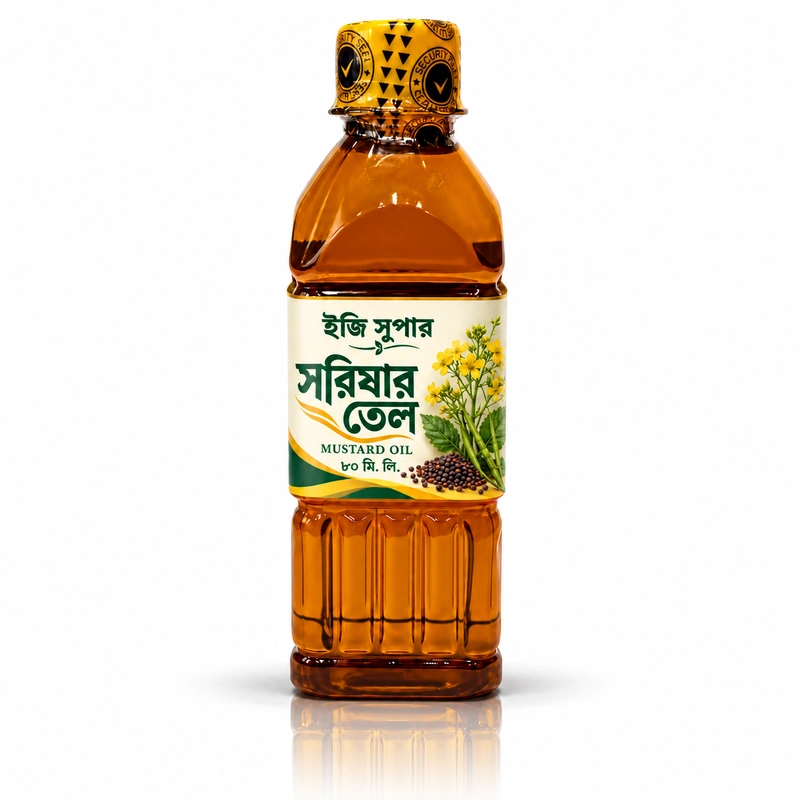
Easy Super Mustard Oil: choose your pack, cook your way
A mustard-led fish curry, freshly mixed bhorta or a batch of mango pickle calls for a different flavour from a neutral cooking oil. Easy Super Mustard Oil belongs in that part of your kitchen: the dishes where mustard is intended to contribute to the meal.
Choose from 80ml, 250ml, 500ml, 1 litre and 2 litres. Consider how often you cook with mustard oil and whether you need a bottle for occasional recipes or frequent use.
Brand declaration: 100% pure, adulteration-free and BSTI approved. Check the supplied bottle for its seal, batch, dates and applicable approval details.
Find the bottle that fits your routine
Choose a smaller pack for occasional use or a larger one for frequent cooking. A lower price per litre is useful only when you can use the contents within the labelled period and store the bottle properly.
Compare all five sizes and calculate the price per litre
| Pack | Consider it for | Price per litre |
|---|---|---|
| 80ml | Occasional bhorta, a small recipe or trying a smaller purchase | Pack price × 12.5 |
| 250ml | Intermittent cooking without keeping a large bottle open | Pack price × 4 |
| 500ml | A kitchen that uses mustard oil alongside another cooking oil | Pack price × 2 |
| 1 litre | Frequent family recipes with measured portions | Same as pack price |
| 2 litres | More frequent use or larger recipe batches | Pack price ÷ 2 |
Use the price currently displayed for the selected variant. Compare the same product and purchasing conditions; delivery fees and promotions can change the final cost. A larger bottle is not automatically the cheapest option.
Think about your last few weeks of cooking rather than buying by household size alone. Two people who cook several mustard-based dishes may use more than a larger family that brings out the bottle only for bhorta. Pack size does not set a recommended serving or a safe daily intake.
Where mustard oil makes culinary sense
Consider bhorta, muri mixes, fish, vegetables, marinades and pickles where the recipe calls for mustard character. Measure a small amount first, and count finishing oil as well as the oil used to start cooking.
Ideas for bhorta, fish, vegetables, marinades and pickles
- Bhorta and muri: mix a measured amount through the ingredients, then adjust the seasoning. Adding more oil is not the only way to improve flavour; onion, chilli, coriander and acidity also shape the dish.
- Fish curry or steamed fish: follow a suitable recipe and cook the fish thoroughly. Oil contributes flavour but does not make uncooked fish safe.
- Khichuri and vegetables: decide whether mustard is the main flavour or a small accent. This makes it easier to keep the recipe balanced instead of pouring oil until the surface looks glossy.
- Chicken marinades: keep raw chicken chilled, prevent contact with ready-to-eat food and cook it fully. Mustard oil is not a substitute for safe handling.
- Mango pickle: use a reliable recipe, clean equipment and the specified storage method. Covering food with oil alone does not establish that a pickle is safe to keep at room temperature.
These are cooking ideas, not tested recipes for this particular bottle. Where oil is added without further heating, follow the food-use instructions on the supplied label. Keep an allergy-safe alternative available when cooking for guests.
Food handling: WHO Five Keys to Safer Food; NCHFP pickling guidance.
Understand the label before judging the oil
Purity, production method and organic certification answer different questions. Purity and BSTI declarations do not establish seed origin, extraction temperature or a tested nutritional profile. Check the actual label and supporting documents for these details.
What “pure”, “organic”, “chemical-free” and BSTI mean here
- 100% pure and adulteration-free
- These are the brand's declarations for Easy Super. They are not presented here as independently verified laboratory results. A reliable assessment of adulteration requires appropriate sampling and testing.
- BSTI approved
- This is supplied brand information. Use the bottle's applicable approval details when checking the product; approval is not a claim that the oil treats disease.
- Organic
- Organic concerns a defined production and verification system. Pure oil or traditionally pressed oil is not automatically organic. This listing does not identify Easy Super as certified organic.
- Chemical-free
- Oil itself consists of chemical compounds, so the literal phrase is misleading. A specific claim such as “no added colour” needs its own confirmation; it cannot be assumed from the product name.
Colour, pungency, refrigeration and household “purity tests” cannot establish all aspects of composition or safety. If something seems wrong with the seal, label or contents, keep the bottle and purchase details and contact the seller.
Organic terminology: FAO/Codex description and definitions.
Ghani, machine pressing and cold pressing
Traditional pressing can be valuable for the flavour people seek in regional cooking. Modern pressing can offer controlled operation and consistent production. The useful comparison is seed quality, temperature, handling and storage. A ghani can be motor-driven; “machine-pressed” does not automatically mean poor-quality oil.
Where processing can make a positive difference
FAO describes both traditional and powered ghani systems. Their appeal includes the established method and the characteristic flavour developed during processing. Cold pressing is a separate process description: the Codex definition refers to mechanical extraction without applied heat. It is not simply another name for any ghani oil.
A 2025 study of Bangladeshi mustard cultivars found that extraction method affected oil yield and quality measures. This supports paying attention to processing conditions rather than assuming every oil made by one type of equipment is superior.
Controlled processing can help retain desired sensory qualities and manage quality consistently. Hygiene, suitable seeds and protection after pressing still matter. This product is not labelled here as ghani, cold-pressed or wood-pressed because its specific extraction method has not been established.
Sources: FAO on ghani processing; Codex process definitions; 2025 mustard extraction study.
Nutritional benefits and medicinal research
Dietary fat provides energy and helps absorb certain vitamins. Nutritional value, a laboratory antioxidant result and a proven treatment are different things. Use this bottle as food rather than medicine.
What the evidence supports—and what it cannot establish
The WHO favours replacing saturated and trans fats with appropriate unsaturated fats as part of a balanced diet. That is guidance about dietary patterns, not proof that this brand lowers cholesterol or prevents heart disease. Its measured fatty-acid percentages are not supplied here.
Researchers have studied oil-soluble mustard compounds and antioxidant activity under controlled extraction conditions. Another laboratory study investigated the antibacterial action of allyl isothiocyanate. These findings are scientifically interesting, but the tested materials and exposures cannot be treated as equivalent to eating a spoonful of retail cooking oil.
No clinical benefit or medicinal dose for Easy Super is established by those studies. Do not use the oil instead of prescribed treatment for diabetes, high cholesterol, infection, pain or any other condition. More oil does not mean more benefit.
Likewise, evidence about mustard seed, concentrated extracts or essential oil cannot be transferred directly to a food bottle. This listing does not promise a vitamin E amount, an omega-3 dose or a therapeutic effect.
Sources: WHO fat-quality guidance; mustard sinapates study; AITC laboratory study.
How much should you use?
Count all the fat in the day, not just the oil in one dish. Your needs depend on overall food intake, age, activity and health. There is no universal daily spoon allowance for this product. Measuring oil is more useful than pouring directly from the bottle and estimating afterwards.
Calories, measuring spoons and a family-cooking example
All fats supply about 9kcal per gram. As a general kitchen estimate, 5ml of oil is around 40kcal and 15ml is around 120kcal; density and the actual amount poured affect the result. These estimates are not a tested Easy Super nutrition panel.
“Adults should limit total fat intake to 30% of total energy intake or less.”
WHO, 2023
For a 2,000kcal diet, 30% is 600kcal, or about 67g of total fat. That includes food such as fish, meat, eggs, dairy, nuts and snacks; it is not permission to eat 67g of mustard oil.
For portion tracking, if 15ml is mixed evenly into four equal servings and all is eaten, each serving contains approximately 3.75ml from that addition. Add any finishing oil and other fats separately. Unequal portions or oil left behind change the estimate.
A measuring teaspoon means 5ml and a measuring tablespoon means 15ml in these examples. Household cutlery can differ. Do not apply an adult calculation to infants or children. Pregnancy, a prescribed diet or an existing medical condition calls for individual advice, not a serving recommendation taken from a shop page.
Sources: NHS energy value of fat; WHO healthy-diet guidance. Spoon and recipe figures are approximate calculations.
Compare oils by the job they need to do
Mustard oil is useful when mustard flavour belongs in the recipe. A milder oil may suit a dish where other ingredients should lead. Compare fat composition, refinement, cooking instructions, portion size and cost together. No oil earns a universal “best” label from taste, price or one nutrient alone.
Mustard versus seven other edible oils
| Oil | Kitchen role | Nutritional consideration |
|---|---|---|
| Mustard | Recipes that call for mustard character | Composition and erucic acid require product-specific information |
| Soybean | Usually mild when refined | Generally rich in polyunsaturated fats |
| Sunflower | A mild option in refined form | Standard and high-oleic versions have different fat profiles |
| Canola | Usually mild; useful where mustard flavour is unwanted | A low-erucic oil category; not equivalent to conventional mustard oil |
| Olive | Virgin and refined styles offer different flavours | Generally rich in monounsaturated fat |
| Rice bran | Often selected for a relatively mild flavour | Contains both monounsaturated and polyunsaturated fats |
| Palm | Refined products are widely used in cooking | Higher in saturated fat than many liquid nontropical oils |
| Coconut | Virgin oil contributes coconut flavour | High in saturated fat; still energy-dense |
Equal amounts of different pure cooking oils generally have similar calories. Switching oils does not cancel the calories already in a recipe. For cooking temperature, use the actual product instructions; a generic internet smoke-point number does not account for every variety, refinement method or storage history.
References: Heart Foundation cooking-oils statement; Codex vegetable-oil definitions.
Allergy and erucic acid deserve attention
Avoid this product if you have a mustard allergy. Heating is not a reliable way to make an allergenic food suitable for you. Erucic acid is a separate issue: its concentration varies, and this product's level is not stated here. Neither strong aroma nor a purity declaration answers that question.
Who needs individual advice before choosing an oil?
For a diagnosed mustard allergy, follow your allergy plan and check ingredients every time. Keep utensils and food preparation separate to avoid cross-contact. Seek urgent medical help for breathing difficulty or throat swelling after a suspected reaction.
Erucic acid occurs naturally in mustard and related oilseeds. EFSA's assessment identified concern with high long-term exposure, particularly in children. Without this bottle's concentration, a product-specific safe daily amount cannot be calculated. Cold pressing does not establish a low-erucic product.
Ask a qualified clinician or dietitian about suitable oil choices for children, an individual medical diet or a condition requiring fat restriction. Do not begin a daily spoonful routine on the assumption that a traditional food is a preventive medicine.
Sources: Health Canada on mustard allergy; EFSA on erucic acid.
Heat carefully and protect the bottle after opening
Follow the label, avoid deliberate smoking and use a measured amount for the recipe. Keep the cap closed and the bottle away from sunlight and stove heat. The printed shelf life and any after-opening instructions take priority over a general rule about how long mustard oil “usually lasts”.
Heating, reuse, storage and signs to stop using the oil
- Prepare ingredients before warming the pan so oil is not left heating unattended.
- If oil smokes, remove the heat safely and let it cool. Do not continue cooking in visibly burnt oil.
- Avoid repeated frying and reheating. Adding fresh oil does not restore degraded oil to its original condition.
- Never pour used frying oil back into the original bottle. Keep food particles and water out of stored oil.
- Use clean, dry equipment and do not keep topping up an unwashed dispenser with new batches.
- Discard oil with an unpleasant rancid smell or a clear sign of contamination. A normal smell alone cannot guarantee safety.
For infrequent use, a smaller bottle can be more practical than storing a large opened one. Marking the opening date can help you follow the label. Food containing oil still needs its own appropriate storage; oil does not make cooked leftovers shelf-stable.
General guidance: American Heart Association cooking-oil advice; FSSAI on repeated frying.
Where mustard oil comes from
Mustard oil has an established place in Bangladeshi and Indian cooking. Global statistics often combine related rapeseed and mustard crops. A country's large rapeseed or canola industry does not mean that all its oil is the same as a bottle sold as mustard oil.
Production countries, crop categories and this bottle's origin
USDA reporting includes Canada, China and India among major producers in the wider rapeseed category; the European Union is reported as a group. Bangladesh also grows mustard and rapeseed, and local reporting commonly combines them. Crop totals, oil production and exports are different measures, so they should not be mixed into a single “best mustard oil country” ranking.
These agricultural facts do not identify the seeds in Easy Super. Use the manufacturer's origin declaration for that information; the brand name or a gallery setting does not establish local seed sourcing.
Sources: USDA world oilseed reporting; USDA Bangladesh crop-category explanation.
A few final checks before you choose
Select a practical pack, check its price and read the label. Consider both the recipes you cook and your household's dietary needs. The answers below cover additional shopping questions.
Ingredients, raw use, authenticity and delivery checks
- Does this listing confirm every ingredient?
- No. Read the supplied ingredient list for the complete declaration. The product name does not establish added vitamins, flavourings or the absence of every additive.
- Can I use it without further cooking?
- Follow the bottle's food-use instructions. Traditional finishing uses do not replace those directions or the allergy precautions.
- Is a darker colour or stronger smell proof of purity?
- No. Sensory differences can reflect seeds and processing, while authenticity needs suitable evidence. Do not choose a bottle solely because its smell seems stronger.
- What should I check when it arrives?
- Confirm the ordered volume, intact seal, readable label, batch and dates. Keep the packaging and order details if you need to report a discrepancy.
- Does a larger pack provide more health benefit?
- No. It changes the quantity purchased, not the dietary role of a measured portion.
.webp1793592768hp8zYlXq.webp)