







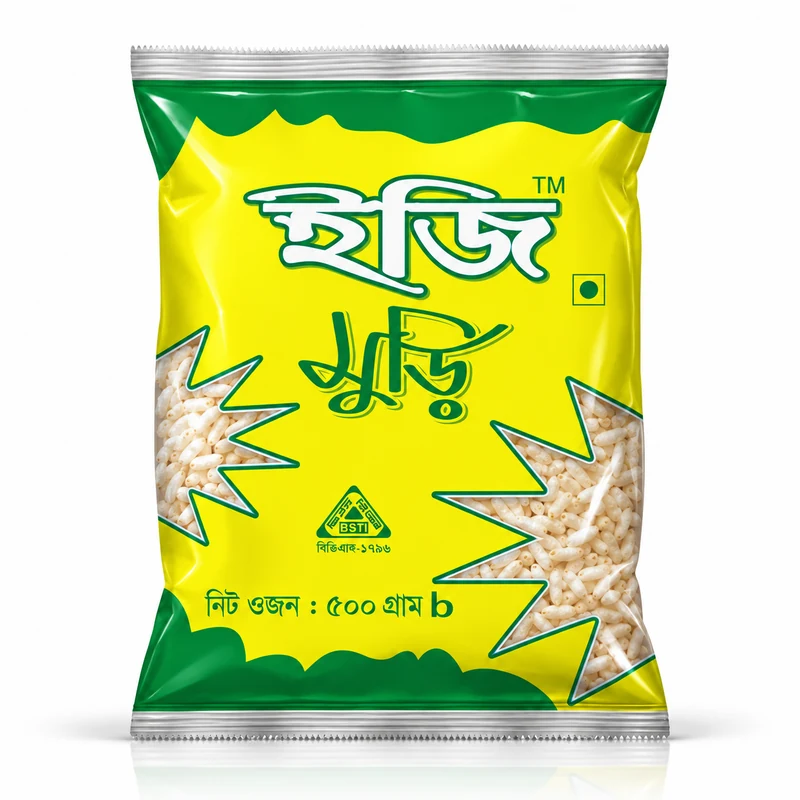
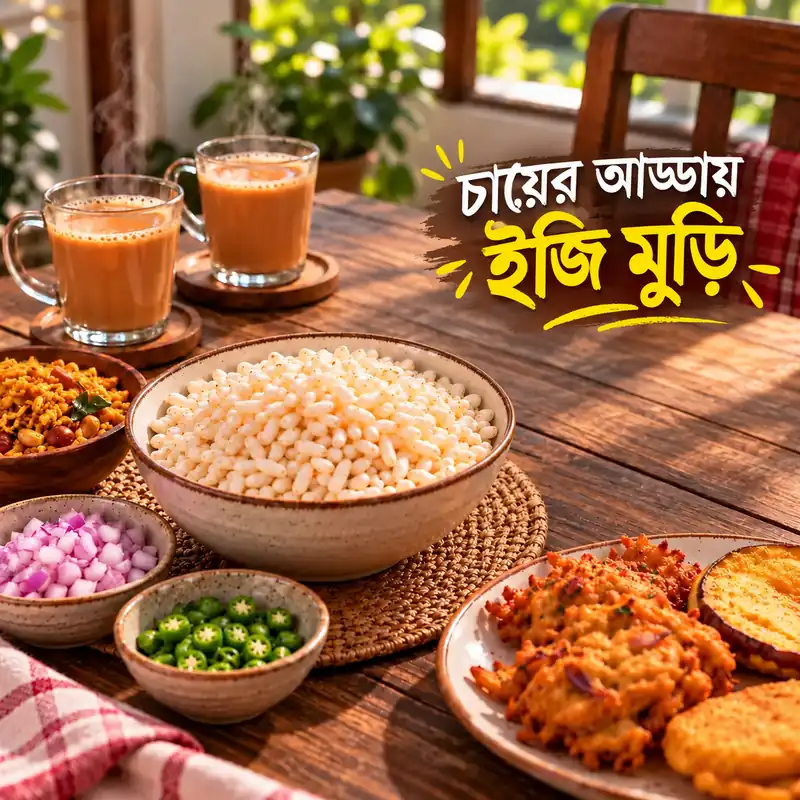
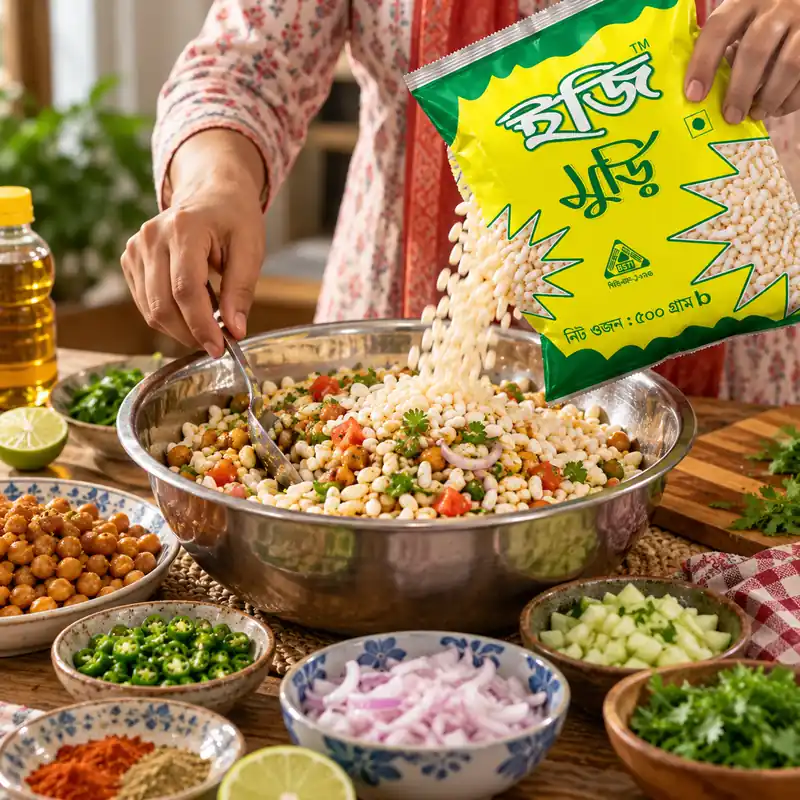
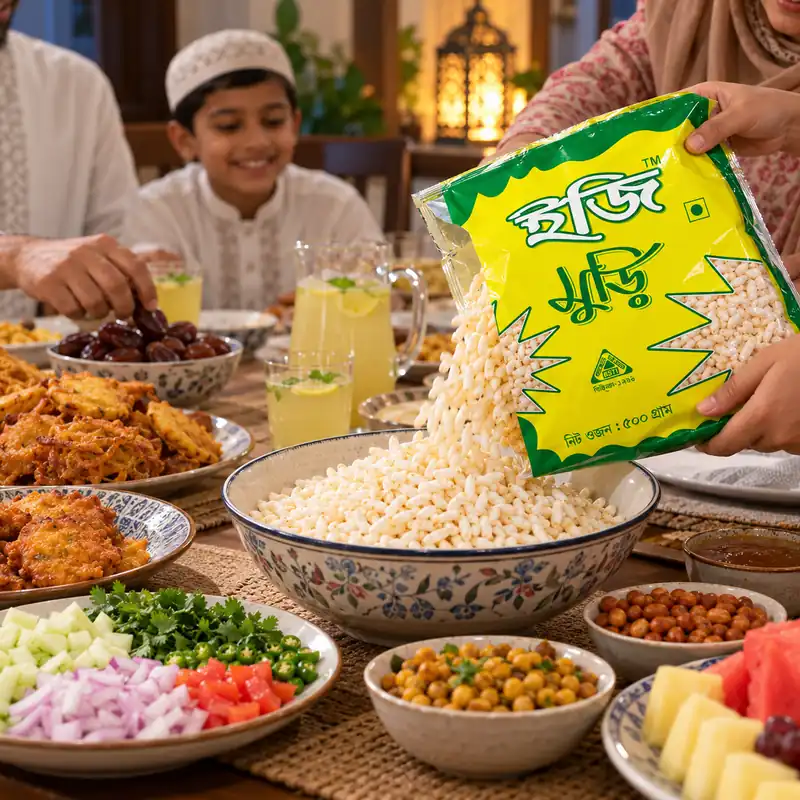
A bowl of puffed rice can become a quick afternoon snack, a lively homemade jhalmuri or part of a familiar Bangladeshi iftar table. Easy Muri (Puffed Rice) 500g gives you the starting ingredient; you decide whether to keep it simple or mix it with chickpeas, vegetables and spices.
Made by Easy Agro Food Ltd. in Bangladesh, Easy Muri is a BSTI-approved product, based on the manufacturer's details confirmed for this listing. Its appeal is flexibility: serve it plain, turn it into a savoury mix or use it in a traditional recipe.
What is muri, and why is it useful in a Bangladesh kitchen?
Muri is rice that has been expanded into light, crisp grains. Compared with a cooked bowl of rice, it feels airy and requires little preparation at serving time.
More on puffed rice, texture and serving expectations
The ingredient itself is mildly flavoured; most of the distinctive taste in a jhalmuri bowl comes from the fresh additions. Onion adds bite, green chilli brings heat, lemon brightens the mix, and roasted peanuts or cooked chickpeas change the texture. You can adjust these additions without pretending that the plain puffed rice contains the nutrients of the completed snack.
Puffing creates a porous structure in each grain. The grains occupy more space than their weight might suggest, so a generous-looking bowl does not automatically represent the same weight as a bowl of cooked rice. The opposite misunderstanding also happens: because muri feels light, a person may refill the bowl several times without noticing the combined portion.
There are different ways to prepare puffed or expanded rice. Heat, initial grain condition, moisture and processing technique influence the final shape and crunch. The exact rice variety and process used for this Easy Muri pack have not been confirmed, so a named rice variety or a special production claim would be misleading.
A good use of plain muri is to make the base of the snack visible. Add ingredients deliberately rather than coating everything with a heavy layer of sauce. If you enjoy a more pronounced sour note, try a little lemon. For crunch, add roasted peanuts close to serving. For a less spicy bowl, leave out chilli or offer it separately.
There is no single authentic household recipe. One family may prefer chopped cucumber and chickpeas; another may use chanachur, fried lentil snacks or a small amount of mustard oil. These are preparation choices, not ingredients verified to be inside the Easy Muri packet.
For a group, put the puffed rice in a large dry bowl and offer the wet and spicy ingredients on the side. People can build a mixture that suits their taste. This also avoids making the whole batch soft before everyone is ready to eat.
Build an iftar bowl with chola muri
Chola muri is one of the most recognisable ways to use puffed rice at iftar. The combination is practical: cooked chickpeas, sliced onion, cucumber, coriander and a little lemon can turn dry muri into a colourful shared dish. Dates, water and other iftar foods can be served alongside according to the household's usual routine.
- Prepare cooked chickpeas and allow hot ingredients to cool enough for mixing.
- Chop cucumber, onion, coriander and any preferred green chilli.
- Keep the puffed rice dry until the table is nearly ready.
- Mix gently, add lemon or your preferred seasoning, and serve promptly.
Timing, seasoning and practical iftar preparation
When preparing several foods for iftar, the simplest improvement is to separate preparation from final mixing. Wash and cut vegetables in advance using clean utensils, cook the chickpeas properly, and arrange small dishes of seasonings. Keep the muri unopened or in a covered dry container while other cooking continues.
Just before serving, place the dry puffed rice in a mixing bowl. Add chickpeas that are not sitting in excess liquid, then the chopped vegetables. Fold the mixture with a spoon so the grains are coated without being crushed. If some guests prefer stronger heat, let them add chilli to individual portions rather than making the entire batch very hot.
Mustard oil is a familiar flavour in many Bangladeshi muri mixtures, but it is not required. A small amount changes aroma; a generous amount also changes the fat and energy of the finished snack. Likewise, extra chanachur, fried items and salty sauces can make a bowl more indulgent than the plain muri alone.
Chickpeas contribute different nutrients from rice, including protein and dietary fibre, while cucumber, onion and herbs add freshness. This is a useful reason to vary the bowl rather than describing plain puffed rice as a complete nutritional package. A mixed iftar plate is still best considered alongside the rest of the meal and the person's needs.
For a family table, serve each wet accompaniment in its own dish if people might eat at different times. Muri loses crunch as moisture enters. Mix a smaller batch first; prepare more later if needed. Leftover dry muri can be stored separately, whereas a bowl already mixed with moist ingredients should not be treated as a shelf-stable packet snack.
If using peanuts, packaged chanachur or other toppings, check their allergens and ingredient lists. Guests who avoid particular ingredients should have a plainly identified portion without those toppings. Clean preparation surfaces and utensils matter as much as the presentation.
Calories, carbohydrates and a sensible portion
Puffed rice is principally a carbohydrate food. Bangladesh's Food Composition Table (2013) lists generic salted puffed rice at approximately 361 kcal and 82.7 g available carbohydrate per 100 g. Those figures are educational reference values, not a laboratory analysis or declared nutrition panel for Easy Muri.
Using that reference only, 25 g would provide roughly 90 kcal and 20.7 g available carbohydrate before adding other ingredients. Weighing a portion is more reliable than guessing from the size of a bowl. A bowl with chickpeas, nuts, oil or chanachur has a different total from the puffed rice alone.
Expanded nutrition guide: protein, fibre, blood sugar and weight goals
Why the composition of the whole bowl matters
The same Bangladesh reference lists approximately 6.7 g protein, 0.1 g fat and 1.4 g fibre per 100 g of the sampled generic salted muri. The figures help explain why plain rice puffs are not a particularly concentrated source of protein or fibre. Actual nutrient values differ with rice, processing and formulation; the Easy Muri pack's own declaration remains the appropriate product-specific reference when available.
For a more varied snack, add a moderate amount of cooked chickpeas, vegetables or other suitable foods. Chickpeas and vegetables do not erase the carbohydrates in the muri, but they make the overall dish different in texture and nutritional composition. The quantity of each addition still matters: a spoonful of chopped vegetables is not the same as a substantial vegetable serving.
Is muri a weight-loss food?
No individual food causes weight loss by itself. Muri appears voluminous because the grains are expanded, which may help someone prepare a measured portion that looks generous. Yet repeated servings and rich toppings can add substantial energy. If weight management is your goal, think about total intake over time, portions, hunger and meal quality rather than relying on the appearance of a light snack.
Compare dry foods by weight, not merely by cup or plate. One hundred grams of dry muri and one hundred grams of cooked rice contain different amounts of water. Saying that muri is always lower in calories than rice without defining the comparison is inaccurate. A fair comparison specifies grams of the food as eaten and any ingredients used.
What about blood glucose?
Because puffed rice provides starch, the carbohydrate amount matters for people managing blood glucose. The US CDC's carbohydrate-counting guidance explains why individuals may track grams of carbohydrate across meals. The suitable amount depends on circumstances such as activity, medication and individual health needs.
Rather than making a blanket claim that muri is forbidden or safe in unlimited amounts for diabetes, measure an appropriate portion and account for the whole plate. A qualified clinician or dietitian can give individual guidance. Sweet drinks, sugar, sweet chutneys and other additions also need to be considered where relevant.
Is plain muri enough for breakfast?
A small bowl can be one part of breakfast, but it is unlikely to supply all the food groups or nutritional variety most people need. Combining carbohydrate foods with appropriate protein sources, produce and fluids can make a more balanced meal. The WHO healthy-diet guidance (2026) emphasises adequacy, balance, moderation and diversity.
Think of the recipe as flexible rather than medicinal. Muri is not a treatment for acidity, digestive disorders or blood glucose concerns; specific medical claims would need specific evidence. Children and older adults also benefit from food textures and portions appropriate to their abilities, particularly when hard whole nuts or very spicy toppings are served.
Beyond iftar: jhalmuri, tea-time mixes and simple variations
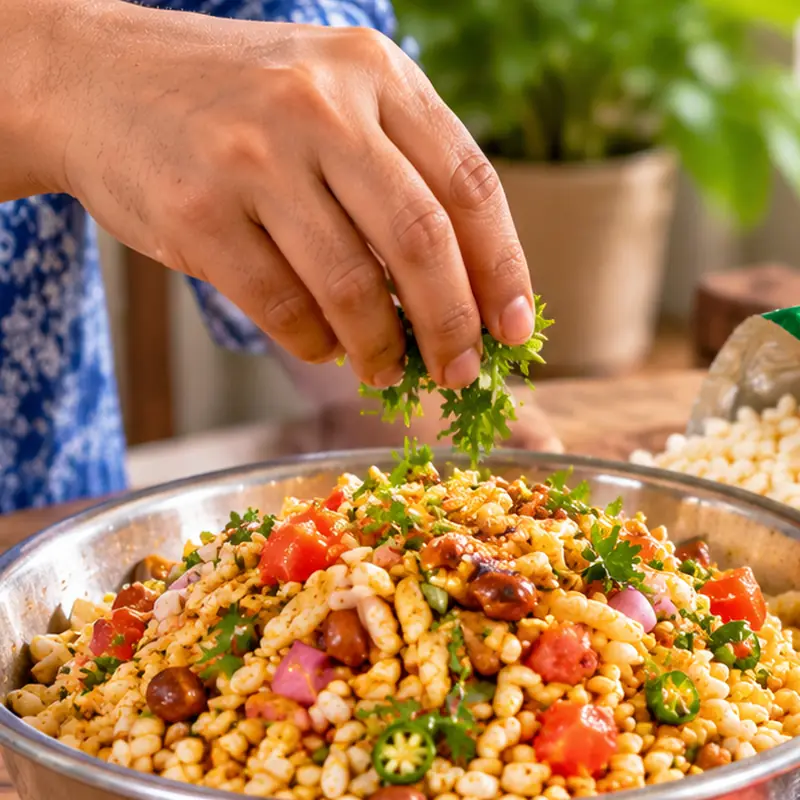
For homemade jhalmuri, combine muri with chopped onion, green chilli, fresh coriander, tomato and a little lemon, then add roasted peanuts or chanachur if you like. For an everyday cup of tea, a small dry bowl of muri with separate savoury snacks can be enough. The most useful rule is to add wet ingredients at the last moment.
Three flavour approaches and how to serve each one
Fresh and tangy
Use cucumber, tomato, coriander, a few drops of lemon and green chilli to taste. Choose firm vegetables, chop them shortly before mixing, and drain excess liquid. This gives the muri a bright flavour while retaining some texture. If a family member dislikes raw onion, serve it separately instead of making it essential to the recipe.
Nutty and savoury
Add a measured handful of roasted peanuts and a small portion of chanachur or other crisp toppings. This approach brings contrast between the light puffed rice and denser additions. It also changes the meal's fat, sodium and allergen profile, so it is sensible to check packaged ingredients and avoid describing the entire mixture as automatically low-fat or low-salt.
Plain and quick
When you do not want to chop vegetables, serve a plain portion of muri with tea or water and a separate dish of snacks. People who prefer sweet combinations may use ingredients such as jaggery in traditional preparations, but that makes a different recipe with added sugars. Keep the explanation honest about what the added ingredient contributes.
Try using small bowls for personal servings at a gathering. One guest may want heat; another may avoid peanuts. Small portions allow everyone to choose without wasting a large wet batch. Serving utensils help maintain hygiene, especially if snacks are shared.
How to keep puffed rice crisp after opening
Moisture is the principal everyday enemy of crisp puffed rice. After taking out what you need, close the packet tightly or move the contents into a clean, dry, airtight container. Keep it in a cool, dry cupboard, away from steam from the cooking area. Always follow the pack's printed storage and best-before directions if they give more specific advice.
If the contents smell unusual, show visible mould, or appear contaminated, do not use them. Softness alone may reflect absorbed humidity, but it is not a reliable safety test. A fresh-looking photograph or a sealed-looking AI rendering cannot establish the safety of a physical pack.
Storage checklist, humidity problems and leftover mixed muri
Start with clean, thoroughly dry hands and utensils. A wet spoon introduces moisture into food that should stay dry. When using a storage jar, wash and dry it fully before adding puffed rice. If the jar previously held strong-smelling spices, make sure there is no lingering aroma that could transfer to the contents.
Do not keep an opened packet next to an uncovered sink, boiling kettle or steaming pot. In humid weather, opening and closing the same large container repeatedly also brings moist air inside. Portion out only the amount needed for a snack, then reseal the rest promptly.
Where cupboards become damp during the monsoon, check that storage shelves are dry and free of pests. Keep food away from household cleaners and other substances with strong odours. Protect the package from crushing, especially if it will be moved often or stacked beneath heavier groceries.
Research on puffed cereal texture links moisture absorption to loss of crispness; see the published study on moisture sorption in puffed cereals. That is general category evidence, not a storage-life test for this specific Easy Muri product.
Once muri is mixed with chopped tomato, cucumber or a wet sauce, store it as prepared food rather than as dry puffed rice. Its quality changes quickly, and perishable additions require appropriate food handling. Prepare only what the group expects to eat promptly instead of trying to keep a large mixed bowl crunchy overnight.
If a sealed pack arrives visibly damaged, damp or contaminated, check the seller's relevant order and return process before using it. Do not pour questionable contents into a clean container in the hope that the appearance improves. A correct expiry date matters, but it cannot substitute for sensible handling and inspection.
Muri, chira and khoi are not interchangeable
All three are familiar rice-based foods, but they have different forms and everyday uses. Muri is puffed rice; chira is flattened rice; and khoi is popped rice. They may appear in different sweet or savoury preparations, yet one should not be presented as nutritionally superior without a defined portion and evidence.
How to make a fair comparison when shopping
| Food | Texture / form | Typical preparation idea |
|---|---|---|
| Muri | Expanded, airy and crisp | Jhalmuri, chola muri, dry snack bowls |
| Chira | Flattened rice flakes | Softened or mixed with milk, yoghurt or other foods |
| Khoi | Popped, differently shaped grains | Traditional sweet or dry snack preparations |
Begin by asking how you plan to serve the food. If you want a crisp, quick savoury mix with chopped vegetables, muri is a familiar fit. If you prefer something that softens in milk or yoghurt, chira may better suit that specific recipe. Khoi often has its own traditional preparations and should be chosen for the desired result, not merely because it is another rice product.
Next compare weight, the ingredient declaration and the condition of the pack. A larger-looking bag does not necessarily contain more food by mass. Puffing and flattening affect bulk density, so assess value using the marked net weight and the actual selling price, not package volume alone.
Finally consider the full recipe. A plain rice product and the same product coated in sugar, syrup, oil or salty savoury mix are not equivalent snacks. Nutritional comparisons must state whether ingredients were weighed dry, cooked or prepared with additions. Without that basis, claims such as “healthier than rice” or “lowest calorie option” are too broad.
A straightforward way to assess this pack
Easy Muri is a 500g pack from Easy Agro Food Ltd. in Bangladesh, with BSTI approval confirmed for this listing.
Questions shoppers often ask
Choose it for the meals you actually make: a shared iftar table, jhalmuri for friends or simple tea-time snacks. The product description is meant to help you decide, not to promise that one rice snack will meet every nutritional need.
Can I eat muri directly from the pack?
Puffed rice is generally used as a ready-to-eat snack. Check the actual packet for preparation or handling instructions and inspect its condition before serving.
Does this 500g pack include spices or a jhalmuri mix?
The recipes here illustrate ways to use puffed rice. They do not establish that spices, chickpeas, peanuts or chopped vegetables are included. Refer to the product's ingredient declaration and contents for exact details.
How many servings are in 500g?
It depends on portion size. As a pure arithmetic example, dividing 500g into 25g portions gives 20 portions of plain puffed rice. This is not a manufacturer-set serving recommendation, and recipes with added ingredients change the final amount per person.
Should I mix jhalmuri in advance?
You can prepare the toppings earlier, but combine them with the muri close to serving. Moist vegetables and sauces gradually reduce crispness.
Is Easy Muri suitable for a medically restricted diet?
That cannot be determined from the product name alone. Read the ingredient and allergen declaration, count carbohydrates when needed, and seek personalised advice for a prescribed diet.
Planning your next snack? Select the 500g pack if it suits your household, and use the serving ideas above to make your own mix.

.webp1793592768hp8zYlXq.webp)